Conversion tracking software: A practical buyer’s guide
Conversion tracking software covers many different tools solving different problems under one label. Find the category you need, with options for each.

Table of contents
Better data.
Set up server-side tracking in minutes with Tracklution. Send better conversion data to your ad platforms so their algorithms can optimise for better results from your budget.
Start your free trial“Conversion tracking software” can mean something different depending on who's selling it. Here's how to identify the right software category for your problem and find the tools worth evaluating.
Type “conversion tracking software” into Google or an LLM and you'll get a round-up of very different platforms supposedly falling into the same category. One is a server-side tracking tool, the next is multi-touch attribution software, and another is an e-commerce analytics platform. Even though they're not all solving the same problem, the category name makes it seem like they are. This makes the landscape super confusing, so you’re not alone if you’re feeling lost in a maze of competitor comparisons.
According to Gartner's Marketing Technology Survey, marketers actively use less than half of their martech stack, and just 15% of organizations see ROI from the tools they've bought. Paying for the wrong conversion tracking tool can be a costly choice.
To help you find the software you really need, we’ve grouped the best conversion tracking tools by problem. Identify yours, jump to that section, and find out which tools are worth evaluating.
Before you choose: How these conversion tracking tools work together
Choosing the right conversion tracking software isn’t an either/or decision, and most marketing teams end up using more than one. A direct-to-consumer (DTC) brand, for example, might run server-side tracking to recover lost conversions, attribution software to see which channels deserve credit, and a conversion rate optimization (CRO) tool to get the most out of their traffic.
But there's an order to follow when it comes to implementing software. Don’t put the cart before the horse. Tracking infrastructure comes first, as the foundation everything else rests on. Why? Well, if your data is broken at the source, then everything downstream inherits that bad data. The shiniest dashboard won’t help you if you can’t trust the numbers behind it.
Anni Salo, our CEO here at Tracklution, explains the real issue with data today isn’t quantity, but quality.
“Every marketing team is collecting a lot of data, but how good is the quality of that data? Many marketers don't even know what data they're collecting and where it comes from.”
So what kind of conversion tracking software do you need?
Before comparing any tools, it’s vital that you get to the root cause of your problem. To do so, find the description below that best matches your situation, then skip to that part of the guide. If you have multiple challenges, you can check what type of software can help you solve each one and review our recommended tools for those categories as well.
And full disclosure: We’ve included our own platform Tracklution in one category below because we genuinely believe it’s the best option for server-side tracking. But if that’s not your main challenge, you’ll find another tool better suited for your team.
1. You're losing conversion data and ad performance is suffering
Does your ad platform show fewer conversions than you know actually happened? Maybe your return on ad spend (ROAS) looks worse in your dashboards than it is in reality. Or smart bidding in your PPC campaigns seems to be optimizing toward the wrong audience, and you can't figure out why.
Chances are that your browser-based tracking is missing events due to ad blockers, iOS restrictions, or cookie consent, so your ad platforms are learning from a fraction of what's actually happening.
For example, Tagomo Digital, a paid ads agency, saw direct traffic keep climbing while conversions showed nothing. Privacy rules and browser restrictions were breaking their tracking across client accounts. After rolling out server-side tracking to 250 clients in two weeks, Tagomo recovered 30-70% more conversions across the board.
“Almost every client we've onboarded to Tracklution has seen growth in conversions,” says Mikael Lahtinen, Head of Advertising at Tagomo.
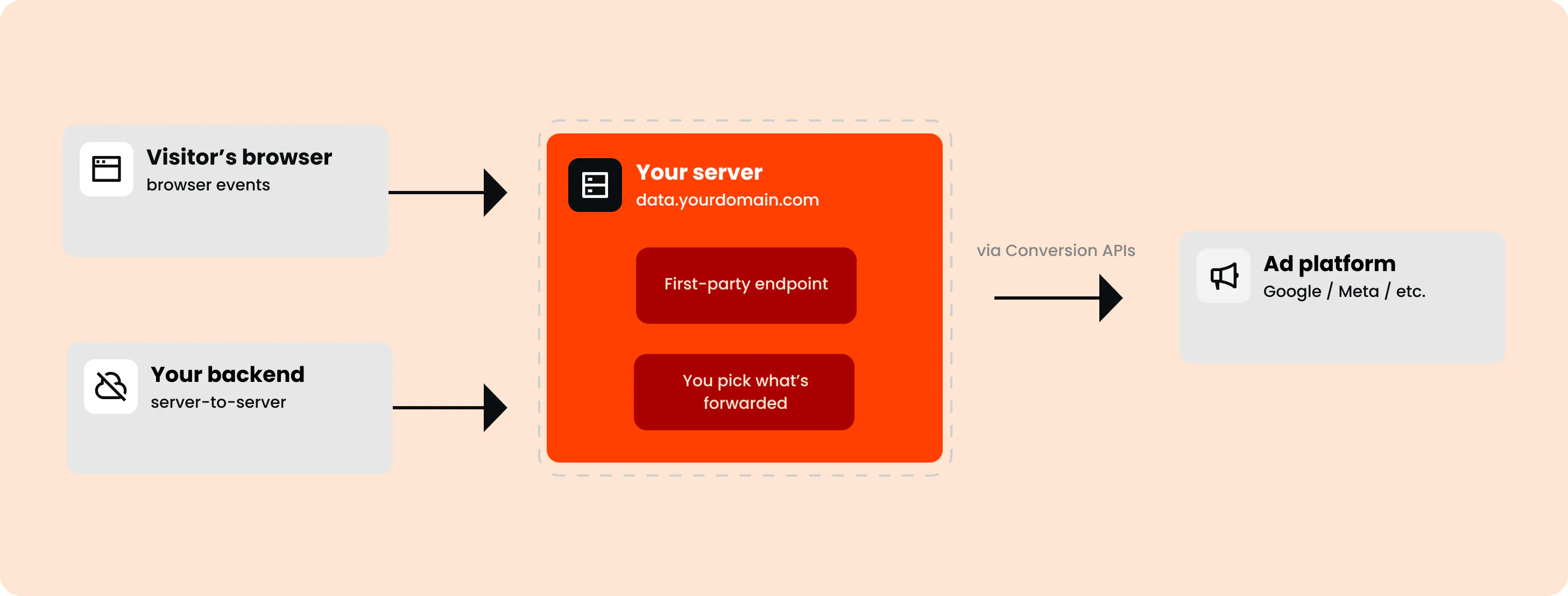
You need: software built for recovering lost conversion data, specifically a server-side tracking tool that captures events on a server you control instead of only relying on browser-based tracking.
“Tracking issues tend to compound. People think they have one problem causing data loss, but it's usually a bunch of small things: consent decline, ad blockers, misconfigured tags, tags that don't load because the page is slow. You lose a small percentage here and there, and suddenly you're losing half your data.” - Anni Salo, CEO at Tracklution
2. You can't tell which channels are actually driving revenue
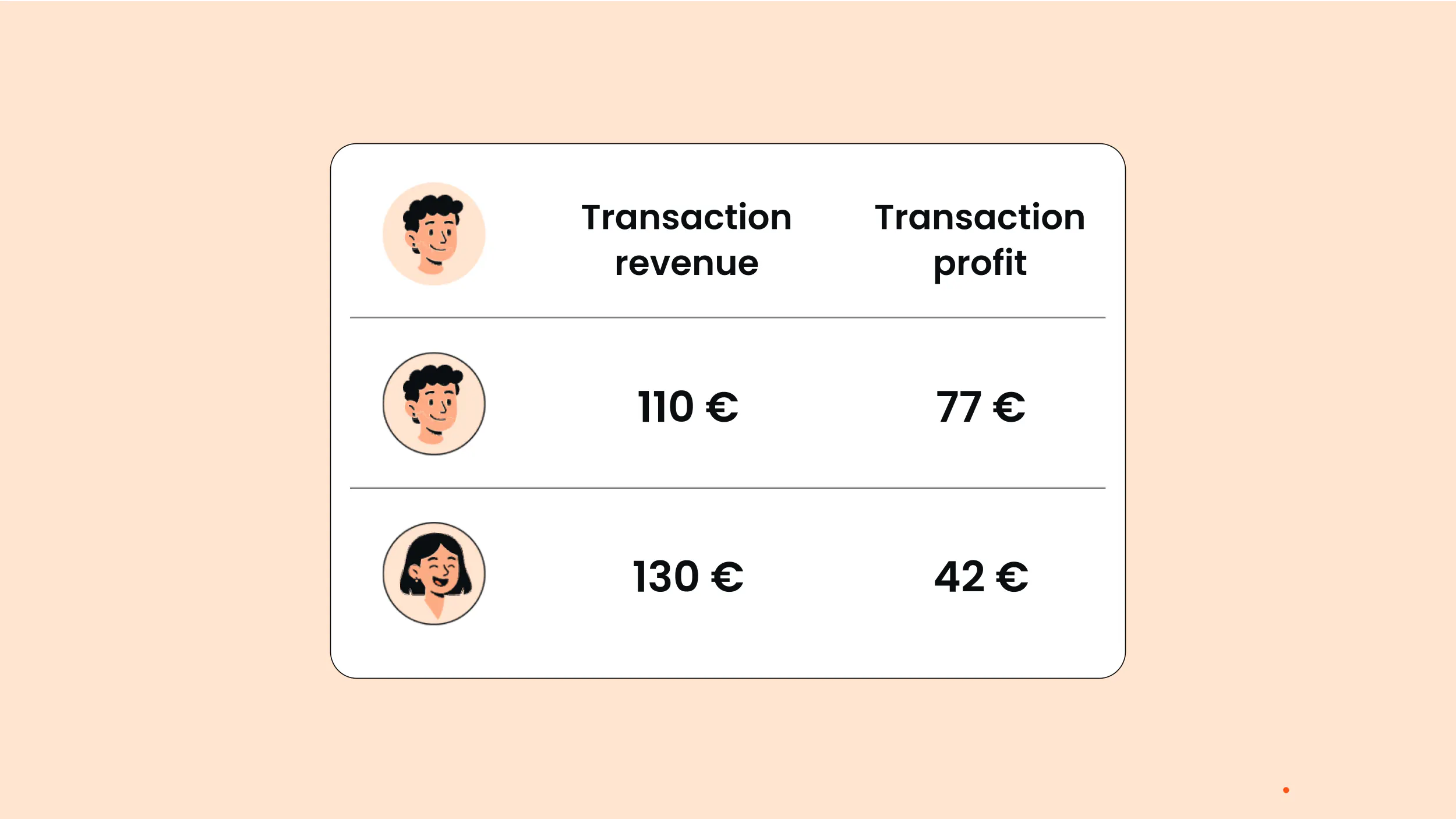
Your sales might come from SEO, an organic Reddit thread, paid campaigns across Meta and Google, direct traffic, or a referral. Yet somehow, every channel claims credit for the same conversion. The math is not mathing, and budget allocation feels like complete guesswork.
That's because each platform uses its own attribution logic, so multiple platforms can claim the same result, whether that’s a sale, a signup, or a lead moving through your pipeline.
You need: software built for multi-channel attribution. These platforms build an independent view of the customer journey instead of trusting each platform's self-reported numbers.
3. You're getting traffic but visitors aren't converting
Your ads or organic content are getting enough impressions and clicks. The problem seems to happen after the click: people land on your site and leave without completing form submissions or buying anything, and you don't know exactly where or why they dropped off.
Standard conversion tracking in tools like Google Analytics only tells you whether an event fired, not what happened on the page leading up to it, so you're left wondering what went wrong.
You need: conversion rate optimization (CRO) and behavior analytics tools, which tell you what happened on the page itself (not just whether a conversion fired), and let you test fixes to boost sign-ups, demo requests, or sales.
4. You’re missing real-time campaign control across multiple traffic sources
You're a media buyer or affiliate managing several offers, traffic sources, and landing pages at once. You need to see which combination is converting right now and switch dead offers without rebuilding your tracking links.
General campaign dashboards report at the platform or campaign level and often lag by hours, so by the time you spot a losing combination, you've already burned the budget testing it.
You need: ad operations and click tracking platforms built for split testing, fraud detection, and postback management.
Best conversion tracking software for recovering lost data
If your problem is signal loss and browser-based pixels missing a growing share of conversions, the following tools capture events server-side too, so you're not relying on the browser alone to get the full picture.
Tracklution
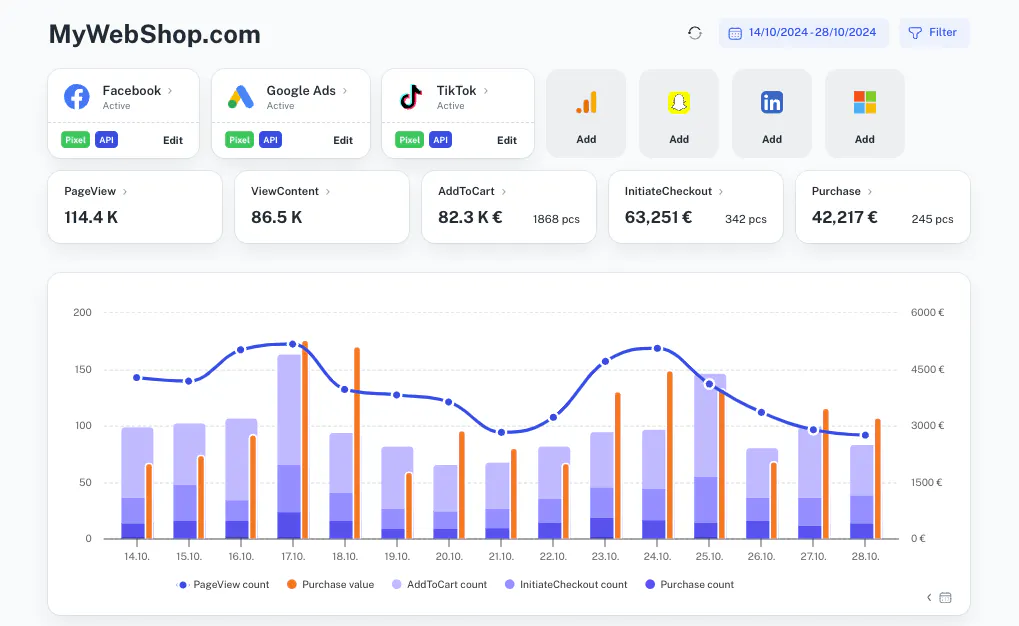
What it is: A server-side tracking platform that recovers conversions lost to ad blockers and browser restrictions, with a no-code setup that takes just 16 minutes.
Who it's for: In-house teams, consultants and freelancers, and advertising agencies who want accurate data flowing to ad platforms without touching gateways or setting up and maintaining servers and containers themselves.
What works well:
- Customers recover 34.2% more conversions on average compared to pixel-only tracking.
- More complete data gives your ad platforms more to learn from, which translates to stronger ROAS over time.
- Works across all major platforms, including Meta, Google, TikTok, Pinterest, and more.
- Easy and quick to set up, with zero maintenance required, unlike complex manual server-side setups.
- Tracklution is fully GDPR compliant as a company and certified under both ISO27001 and SOC2.
Yummy, a Northern European meal kit company, was losing conversions to basic pixel tracking, leaving its ad platforms bidding on incomplete data. After switching to Tracklution, Yummy grew new customers 42% year-over-year, cut CAC by 15%, and tracked 30% more purchases than pixel-only measurement.
“It's going to be a bumpy road going forward with just cookie-based tracking. You're leaving money on the table because server-side tracking can definitely improve your campaign's performance,” says
Heiman Safeen, Group Growth Officer at Yummy.
What to keep in mind:
- Not a customer data platform (CDP) or analytics warehouse
- Not made for highly-technical teams who want complete control over every aspect of the container (which is rarely necessary)
Pricing: Starts at €31/month, with no setup fees or usage-based penalties. Free tier available (5K events/month).
Stape
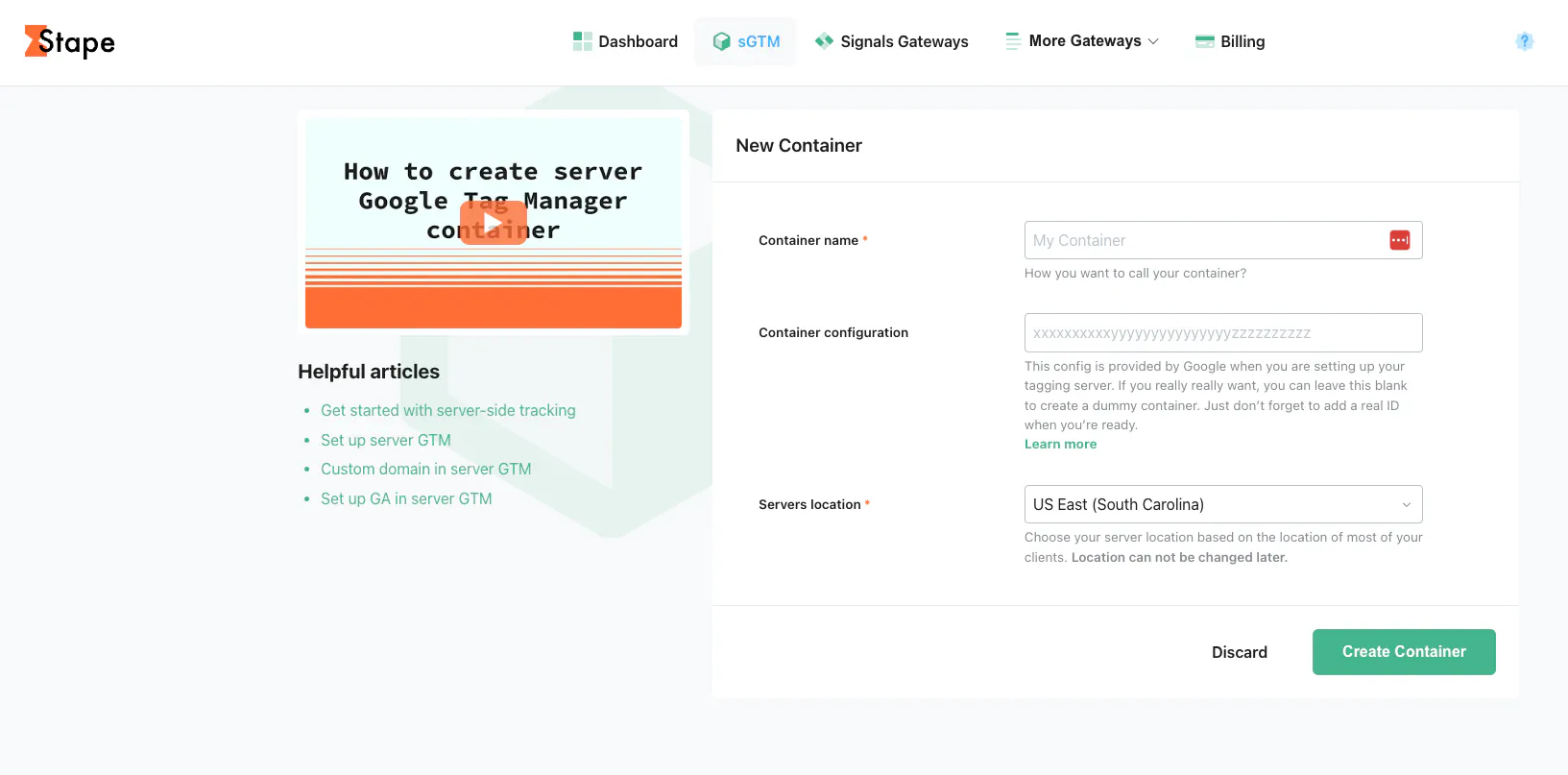
What it is: Managed hosting for a self-built server-side Google Tag Manager (sGTM) container, plus helper tools like prebuilt templates to speed up setup.
Who it's for: Teams who are using (or prefer to use) sGTM and want the hosting to be handled for them, and to share the associated costs..
What works well:
- Prebuilt tracking templates and CMS plugins
- Low entry price for the hosting layer itself
- Stape is fully compliant with ISO 27001, HIPAA, GDPR and DORA
What to keep in mind:
- Setup takes time: you're responsible for building out the sGTM logic, configuring each platform's tags, and debugging when something breaks.
- Teams without that technical resources in-house should budget for a steep learning curve or a consultant's rate on top of the hosting fee.
Pricing: Starts at $17/month for the base hosting plan, with a free tier for smaller sites. If you want Stape to configure your tracking for you, initial setup or an audit with fixes starts from $1,100, and ongoing Stape Care plans start at $99/month on top of hosting.
AnyTrack
What it is: A no-code conversion tracking and marketing attribution platform that automatically syncs data between your website, ad platforms, and affiliate networks.
Who it's for: Media buyers and affiliates who want clean data flowing to ad platforms without building out campaign automation themselves.
What works well:
- Straightforward setup for platform-to-platform data syncing
- 300+ integrations available
What to keep in mind:
- It’s not an affiliate network management tool, so it doesn’t provide affiliate network features like affiliate recruitment, offer management, commission payouts, link generation, or fraud detection.
- Does not offer native campaign automation features, auto-pause rules, or auto-scale rules.
Pricing: Paid plans start at $100/ month. Free tier available.
Find out what your tracking is missing
Tracklution's free tracking audit scans your current setup and shows you exactly where you're losing conversion data, and what to fix first.
Best conversion tracking software for multi-channel attribution
If your problem is conflicting attribution claims across platforms and channels, these tools can help you build an attribution model that isn't biased toward any single ad account's self-reported view.
“It’s a messy world for marketers. You check your Meta Ads account and see one set of numbers, then you go to your analytics platform and see something totally different, and get confused. Most marketers don’t have one source of truth; they just follow whichever platform's numbers are in front of them without the proper visibility into what sits behind those numbers.” -
Anni Salo, CEO at Tracklution
Triple Whale
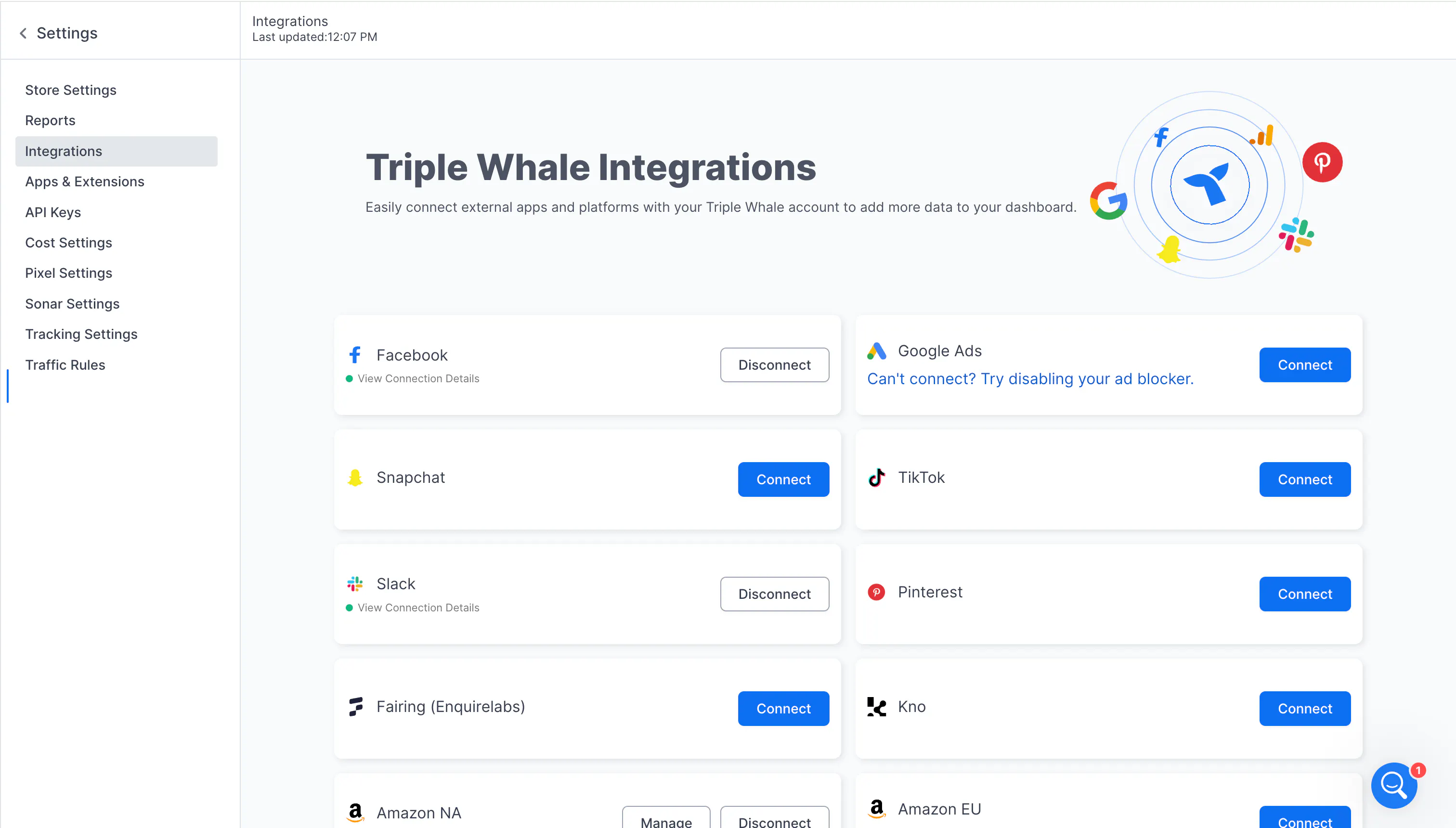
What it is: An e-commerce analytics and attribution platform.
Who it's for: E-commerce brands juggling products at different margins who want both ad results and business metrics, like lifetime value (LTV), average order value (AOV), and profit in one single view.
What works well:
- Combines client-side and server-side data via its Triple Pixel technology.
- Visual dashboards blend client- and server-side tracking with profit, cohort, and creative performance insights.
- Moby AI lets you ask questions in plain language and get custom reports and anomaly alerts without a data analyst.
What to keep in mind:
- Some G2 reviewers report slow-loading dashboards and lag when working with large datasets.
- It offers 60+ integrations across ecommerce and retail (including Shopify, WooCommerce, and BigCommerce)
- Pricing can be high for small businesses.
Pricing: Paid tiers start at around $219/ month and are quoted based on your gross merchandise value (GMV) and package. Free tier available.
RedTrack
What it is: All-in-one ad tracking and marketing analytics platform, combining attribution, dashboards, and automation features.
Who it's for: Media buyers, eCommerce brands, and agencies running multi-channel ad campaigns who need detailed reporting.
What works well:
- Real-time dashboards
- Multi-touch attribution
- Ad automation rules that pause losers and scale winners
What to keep in mind:
- Complex setup process
- Best for teams running many concurrent offers than for a single brand wanting one clean attribution number
Pricing: Starts at $69/month.
Northbeam
What it is: Cloud-based marketing intelligence and data analytics platform that offers an unbiased, accurate view of customer buying journeys.
Who it's for: Enterprise-level direct-to-consumer (DTC) and e-commerce brands looking to optimize their advertising spend and scale profitably.
What works well:
- Strong attribution accuracy
- Combines multi-touch attribution with media mix modeling and incrementality testing
What to keep in mind:
- Real learning curve and a complex interface
- Best suited for companies with $500K or more in monthly ad spend, where the pricing and complexity are easier to justify
Pricing: Starts at $1,500/ month for brands under roughly $125K in monthly ad spend. Professional and Enterprise are custom-quoted.
Cometly
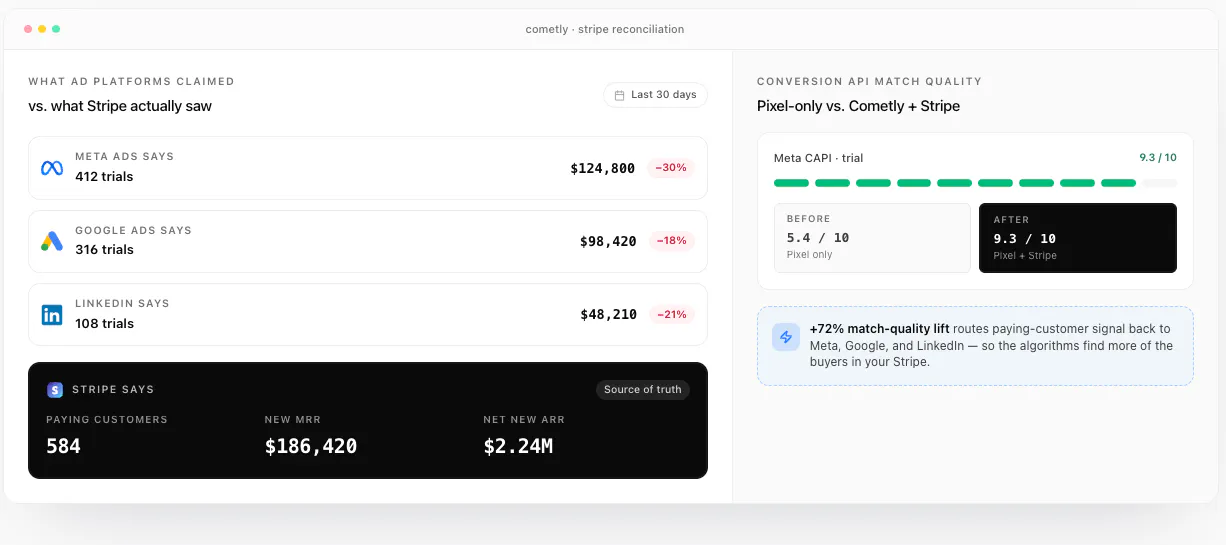
What it is: An AI-powered marketing attribution and analytics platform that offers real-time insights into ad performance.
Who it's for: B2B SaaS companies, performance marketing agencies, and growth teams with complex user journeys and multi-channel spending.
What works well:
- Built for attribution and analytics first, with server-side tracking as part of the offering
- Works across ad platforms and store types
What to keep in mind:
- Some G2 reviewers say documentation doesn't always stay up to date with platform updates, so you might have to rely on support tickets.
- Implementation and onboarding comes with all plans, but the full 60-day white-glove program (dedicated rep, Salesforce and warehouse integration, hands-on support, etc. ) is only for enterprise plans.
Pricing: Custom, based on ad spend. Cometly’s Core plan starts at around $750/month and the Enterprise plan starts at around $1,495/month.
Best conversion tracking software for improving on-site conversion rates
If conversion tracking confirms people aren't taking action but doesn't tell you why, the fix isn't more tracking data. It's visibility into what's actually happening on the page.
Contentsquare
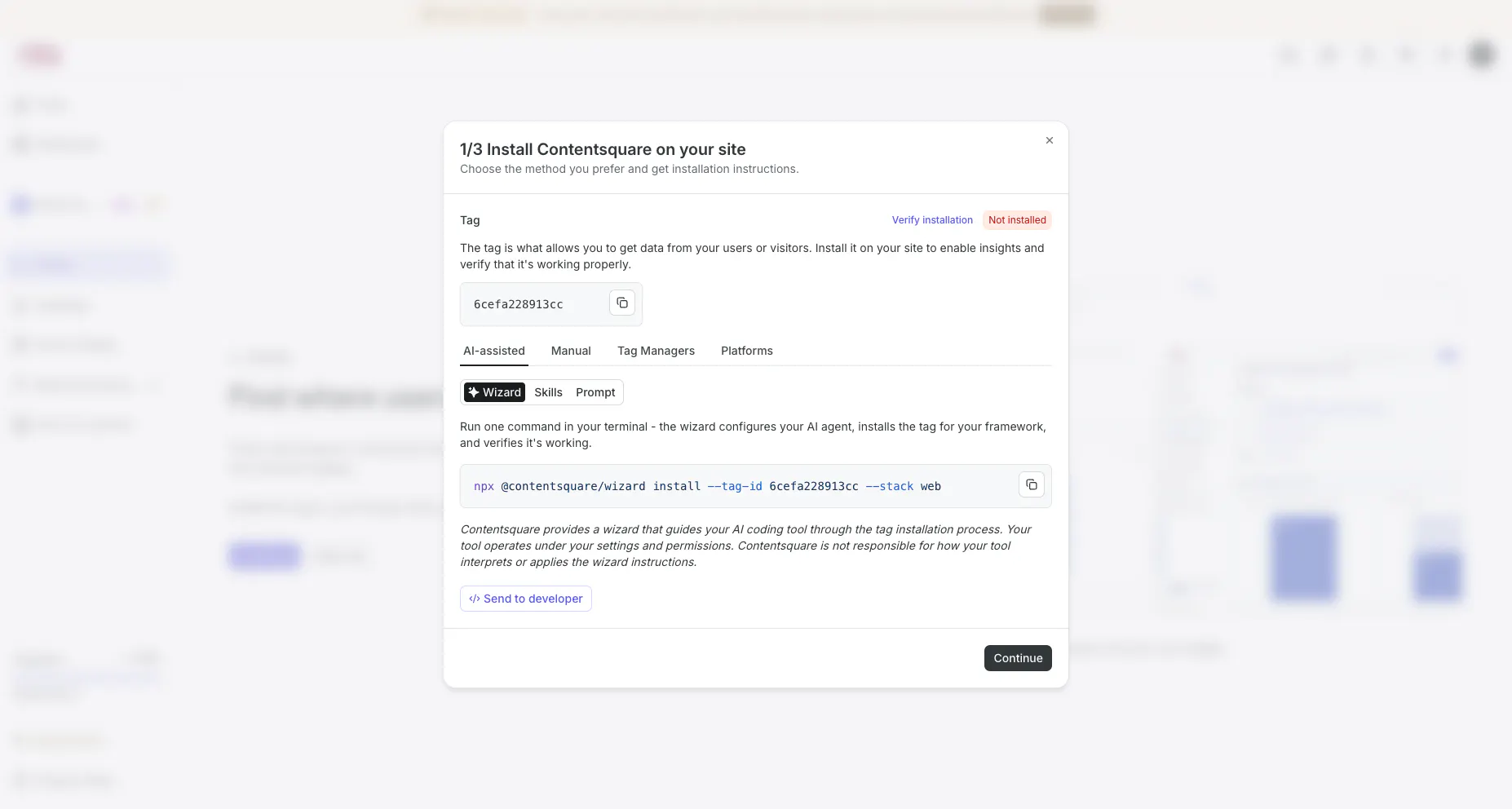
What it is: A product experience insights platform that combines behavior analytics and user feedback to show you how visitors actually use your site. Hotjar and Heap are both now part of Contentaquare.
Who it's for: Product, UX, and marketing teams who want to understand not just what users did, but why, so they can spot problems and test fixes.
What works well:
- Heatmaps and session recordings show exactly where people click, stall, or abandon a page
- Integrations with CRM platforms (like HubSpot), Slack, Jira, Unbounce, and more
What to keep in mind:
- It’s a diagnostic tool, and doesn’t include an A/B testing or experimentation engine to run tests and deploy fixes.
- Since pricing is split into separate products (Experience Analytics, Voice of Customer, and Product Analytics), costs add up fast if you need more than one.
Pricing: Paid plans start at $49/month for Experience Analytics, and $99/month for Voice of Customer. Free tier available with limited functionality.
Mixpanel
What it is: An event-based product analytics platform built around custom events rather than page views.
Who it's for: Teams tracking funnels inside an app or a multi-step checkout who want quantitative details.
What works well:
- Tracks any user action as a custom event, then builds funnels with no step limit to show exactly where and why people drop off.
- Includes session replay and heatmaps, tied directly to your events.
- Free plan covers up to a million monthly events, with a full free first year for early-stage startups.
What to keep in mind:
- Requires standardized event naming from day one, otherwise data gets messy fast as you scale.
- Pricing scales with event volume, so the bill climbs fast as usage grows, and add-ons make total cost hard to predict upfront.
Pricing: Free up to a million monthly events, then scales based on usage. Monthly pricing for 1.5 million events is $140.00 /month.
VWO
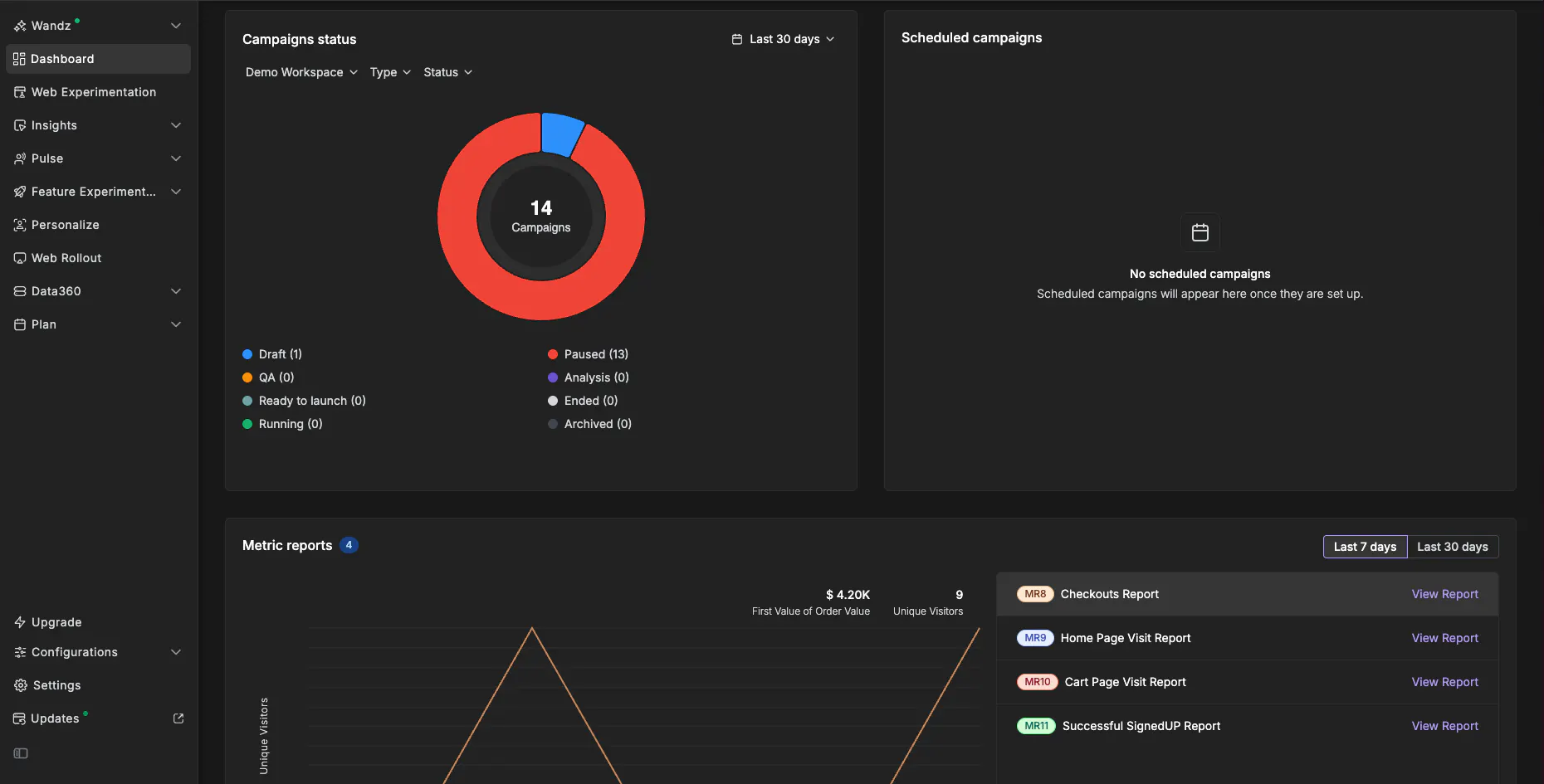
What it is: A conversion rate optimization (CRO) and A/B testing platform that shows you how visitors interact with your site, test structural or visual changes, and increase the percentage of visitors who convert.
Who it's for: Teams that want to run conversion rate optimization, behavior analytics, split testing, and personalization campaigns across websites and mobile apps, all from one platform.
What works well:
- Runs experiments and continuously calculates statistical significance with SmartStats, its built-in algorithmic framework.
- Wandz, VWO's AI agent, generates hypotheses and builds variations from a single prompt, with no caps on variations, users, or recordings on any plan.
What to keep in mind:
- Needs real traffic volume to reach statistical significance; lower-traffic sites will wait a while for results.
- The no-code visual editor might still require a developer for more complex or highly dynamic pages.
Pricing: Custom, quote-based.
Best conversion tracking software for media buyers and affiliates
If you're managing multiple offers, traffic sources, and landing pages at once, speed matters most: you need real-time click data, instant offer switching, and postback management.
Voluum
What it is: A cloud-based ad tracking and optimization platform built to manage paid campaigns at scale.
Who it's for: Affiliate marketers, media buying agencies, and iGaming operators who need multi-source tracking and campaign automation.
What works well:
- AI-powered traffic distribution automatically shifts spend toward better-performing landing pages and offers as data comes in.
- Supports multiple tracking methods (redirect-based, direct, and postback), which is useful when your traffic sources don't all behave the same way.
What to keep in mind:
- Setup can be complex and come with a steep learning curve
- Add-ons and higher-tier features can quickly increase the price
Pricing: Business plans start at $539/month.
ClickMagick
What it is: Web-based ad tracking and conversion attribution platform.
Who it's for: Solo affiliates and small teams who want reliable link tracking without a steep learning curve.
What works well:
- Traffic Quality Score flags bot and fraud clicks per link, and TrueTracking gives accurate cross-device attribution
- Quick setup and user-friendly interface
What to keep in mind:
- You get a daily insights email with recommendations, but no automated optimization
- Not built for large agencies or high-volume media buying
Pricing: Starts at $79/month.
How to choose the right conversion tracking tool
Pinpoint your main problem, see which software category makes the most sense to start with, then layer on from there as needed.
If your problem is... | Start with | Why? |
|---|---|---|
Ad platforms report fewer conversions than you know happened, or ROAS looks worse than it should | Server-side tracking software | Fixes the conversion data everything downstream relies on |
Multiple channels claims credit for the same conversion | Multi-touch attribution platforms | Gives you one independent view instead of each platform's self-reported number |
Traffic and impressions look fine, but people still aren't converting | CRO and behavior analytics platforms | The issue is on the page, not in the data feeding your ads |
You're a media buyer or affiliate juggling multiple traffic sources and can't react fast enough | Ad operations and click tracking software | Gives you real-time control to act before budget gets wasted |
Note: We've assessed these conversion tracking software tools based on publicly available information. But product features and pricing can shift, so always double check specifics directly with the vendor before you buy.
Frequently asked questions
What's the difference between conversion tracking and attribution?
Conversion tracking is the capture layer: did a specific action (like a purchase or a sign-up) actually happen, and did your pixel or server record it? Attribution is the analysis layer: which touchpoint or channel gets credit for that conversion? You need accurate conversion tracking before attribution can be trusted because if data is broken at the source, then everything downstream inherits bad data.
How do I know if my conversion tracking is broken?
There are a few signs: your ad platform reports fewer conversions than you know actually happened, your ROAS looks worse than it should, or your numbers never match between platforms. Check the table above to figure out which category of conversion software can help solve your specific conversion tracking problem.
Can I use conversion tracking tools from more than one category at once?
Yes, most marketing teams do: server-side tracking for clean data, a multi-attribution platform to compare channels, and a CRO tool to fix on-site drop-off. But remember to build them in that order: tracking infrastructure is the foundation.
What's the best conversion tracking software for small businesses and solo marketers?
It depends on your main challenge. Most categories do have a low-cost option, but start with whichever category best matches your problem, not necessarily whichever tool has the lowest price.
Is there free conversion tracking software?
A few tools listed here have free tiers (not just trials): Tracklution, Triple Whale, Mixpanel, and AnyTrack. But keep in mind free tiers can cap out fast due to session, event, and ad platform limits. You can also use sGTM for server-side tracking - the container is free, but you'll have to pay for your own hosting, and budget for setup and maintenance costs with an in house dev or consultant.
What should I check before buying any conversion tracking software?
Check which platforms it sends data to, how it handles deduplication between browser and server events, and whether it's GDPR or CCPA compliant. Then check how setup works: no-code plugin, GTM container, or developer build? That will tell you your real time-to-value and whether you need to invest in any extra consultant resources.
Get your data foundation right
Tracklution's server-side tracking feeds your platforms better signals, reduces data loss, and helps your campaigns scale with clarity.
Related posts
Conversion Tracking
Google Ads conversion tracking in 2026: A complete guide
Learn how Google Ads conversion tracking works, compare client-side and server-side setups, see where Enhanced Conversions fits, and choose the right approach.
Conversion Tracking
Google Ads conversion tracking in 2026: A complete guide
Learn how Google Ads conversion tracking works, compare client-side and server-side setups, see where Enhanced Conversions fits, and choose the right approach.

Conversion Tracking
Shopify Google Ads Conversion Tracking Setup Guide
Set up Shopify Google Ads conversion tracking, find out why Google Ads reports fewer conversions than Shopify, and learn how to recover the missing sales.
Conversion Tracking
Shopify Google Ads Conversion Tracking Setup Guide
Set up Shopify Google Ads conversion tracking, find out why Google Ads reports fewer conversions than Shopify, and learn how to recover the missing sales.
Conversion Tracking
Ecommerce conversion tracking: Fix your tracking gaps
See how ecommerce conversion tracking recovers lost conversions and improves marketing spend efficiency.
Conversion Tracking
Ecommerce conversion tracking: Fix your tracking gaps
See how ecommerce conversion tracking recovers lost conversions and improves marketing spend efficiency.
Questions and answers
What does Tracklution actually do?
Tracklution sends conversion data directly to ad platforms (Meta, Google Ads, TikTok, etc.) through server-side APIs. Instead of relying on browser pixels that get blocked by ad blockers, iOS privacy changes, and cookie restrictions, your data goes server-to-server. The result: ad platforms see more of your real conversions, their algorithms optimize better, and you get better ROAS.
What is server-side tracking?
Server-side tracking gathers first-party data directly on your website and sends tracking events to ad platforms via Conversion APIs. This approach bypasses restrictions from iOS devices, ad blockers, and privacy-focused browsers, providing more accurate data and making your paid advertising more efficient.
Is it just one setup that feeds data into all my ad platforms?
Yes. You install Tracklution once, connect your ad accounts, and it sends conversion data to all platforms simultaneously through their respective APIs (Meta CAPI, Google Ads API, TikTok Events API, etc.). No need to manage separate server-side setups for each platform.
How much more conversion data will my ad platforms actually see?
On average, clients report 34.2% more conversions compared to traditional browser-based pixels. This means the ad algorithms have significantly more signal to work with, which translates to 15-35% lower customer acquisition costs for most clients.
Do I need developers to set this up?
No. Setup takes 5-15 minutes depending on your platform. For Shopify, WooCommerce, and other supported platforms, it is plug-and-play. You do not need custom coding or engineering resources. For GTM users, you can keep your existing setup and add Tracklution alongside it.
Do I need to remove my existing tracking tags?
Not necessarily. Tracklution works alongside your current setup. You can run both in parallel initially to compare data, then decide whether to simplify.
What about the DNS / CNAME setup?
Tracklution uses a first-party CNAME record on your domain for data collection. This takes a couple of minutes to configure and up to 48 hours to propagate. It is what makes the tracking resistant to ad blockers and browser restrictions.
Can I verify that the data is actually more accurate?
Yes. Run Tracklution alongside your existing tracking and compare. The dashboard also shows "recovered events" so you can see exactly how many conversions would have been missed without server-side tracking.
Can I distinguish between organic and paid traffic?
Yes. Tracklution preserves traffic source attribution. The conversion data sent to each ad platform includes the proper attribution parameters.
What about offline conversions (phone calls, in-store, CRM events)?
Tracklution supports offline conversion tracking through webhooks and CRM integrations. If someone clicks an ad, then converts offline, you can feed that back to the ad platforms. Clients using this see up to 35% reduction in acquisition costs because the algorithms learn from the full conversion picture.
How does this work with cookie consent and CMP tools?
Tracklution supports both Basic and Advanced Consent Mode. It reads your CMP data layer automatically and respects user consent choices. In Advanced Consent Mode, it can still collect anonymized, cookieless data when users decline cookies, which helps ad platform modeling without violating privacy rules. Fully GDPR-compliant.
How is this different from Stape or building your own sGTM setup?
Stape provides server-side GTM hosting, which means you still need to build and maintain the tags, triggers, and configuration yourself. Tracklution is a complete solution: plug-and-play setup, automatic event detection, built-in consent management, a real-time analytics dashboard, and ongoing maintenance of all API connections. When ad platforms change their APIs (which happens often), we handle the updates.
How does the agency partner model work?
Single dashboard to manage all client accounts. Each client has their own tracking container. The platform handles all technical maintenance, so you are not stuck troubleshooting API changes or broken tracking.

Have further questions?