Best Stape Alternatives for Server-Side Tracking in 2026
Discover top Stape alternatives for server-side tracking. Compare features, pricing, and suitability to improve your marketing data.

Table of contents
Better data.
Set up server-side tracking in minutes with Tracklution. Send better conversion data to your ad platforms so their algorithms can optimise for better results from your budget.
Start your free trialIf you’ve worked with server-side tracking, chances are you’ve come across Stape. It’s one of the most widely recognised tools offering a convenient way to host server-side Google Tag Manager (sGTM) containers without having to set up your own infrastructure.
Stape earned its popularity by making server-side Google Tag Manager accessible. It's a shared hosting solution which makes it more affordable than traditional options, and offers some prebuilt templates for popular platforms like Meta Conversion API, GA4, and TikTok Events API to make the process a bit easier.
However, despite Stape’s popularity, there are a number of reasons why other solutions may be more suitable for your business. In this piece, we’ll cover your top server-side tracking alternatives to Stape.
Overview: Stape alternatives for server-side tracking
Tool | Category | Best for | Pricing |
|---|---|---|---|
Tracklution | Plug-and-play / No-code server-side tracking | Marketers & agencies seeking effortless, reliable tracking | SaaS model starting at around €30/month. Monthly/yearly plans, no hidden fees. 14-day free trial available |
Reaktion | Plug-and-play / No-code server-side tracking | Shopify merchants wanting plug-and-play CAPI + profit dashboards | Shopify app; tiered monthly fee by order volume |
Wetracked.io | Plug-and-play / No-code server-side tracking | eCommerce brands (Shopify, Woo) wanting instant Meta & Klaviyo integrations | From $49/month |
sGTM (self-hosted) | DIY / sGTM hosting | Technical teams wanting full flexibility | Pay-as-you-go cloud cost; setup and maintenance required |
Taggrs | DIY / sGTM hosting | Small teams or agencies experimenting with sGTM | Free up to 10 k events, paid plans start at around €20-25/month |
Addingwell | DIY / sGTM hosting | Tech teams wanting managed sGTM hosting with UI tools | Free Sandbox, paid usage-based plans from ~€90/month (2 M requests) |
JENTIS | Enterprise / CDP platforms | EU enterprises prioritising privacy and compliance | Starts at ~€490 / mo; custom enterprise tiers available |
Tealium EventStream | Enterprise / CDP platforms | Enterprises needing real-time data collection and activation | Custom pricing (typically enterprise-level) |
Segment | Enterprise / CDP platforms | Companies needing unified customer data for analytics and activation | Free developer tier; paid plans from ~$120 / mo; custom enterprise pricing |
Elevar | E-commerce tracking specialists | Shopify and e-commerce brands seeking precise server-side conversion tracking | From ~$200 / mo (1 000 orders), scales with volume |
ProfitMetrics | E-commerce tracking specialists | Merchants focused on profit and margin-based ad decisions | Free trial, usage-based monthly plans |
Hyros | Attribution & analytics platforms | Marketers seeking unified multi-channel attribution and call tracking | Custom revenue-based pricing, typically from ~$230/month+ |
Triplewhale | Attribution & analytics platforms | Shopify stores wanting detailed analytics and creative attribution | GMV-based pricing, typically from ~$1,000+/month; free trial available |
Redtrack | Attribution & analytics platforms | Performance marketers needing cross-channel tracking and automation | From $149/month (Solo); higher tiers $399–999+, usage caps apply |
Why look for a Stape alternative?
If you’re reading this post, you’re likely already in the market for an alternative to Stape. Perhaps you’re using Stape currently and need something better suited to your needs. Or maybe you’re considering investing in server-side tracking software and want to understand your options before pulling the trigger.
In any case, there are a number of practical reasons why it’s worth considering alternatives; let’s break them down.
For many teams, Stape has been their first glimpse into server-side tracking.
But as teams gain experiences of server-side, identify new priorities, or scale up, their needs change. Many start to look for something more convenient to deliver the benefits of server-side tracking without the ongoing maintenance, container debugging, or DevOps dependency that often comes with sGTM setups like Stape.
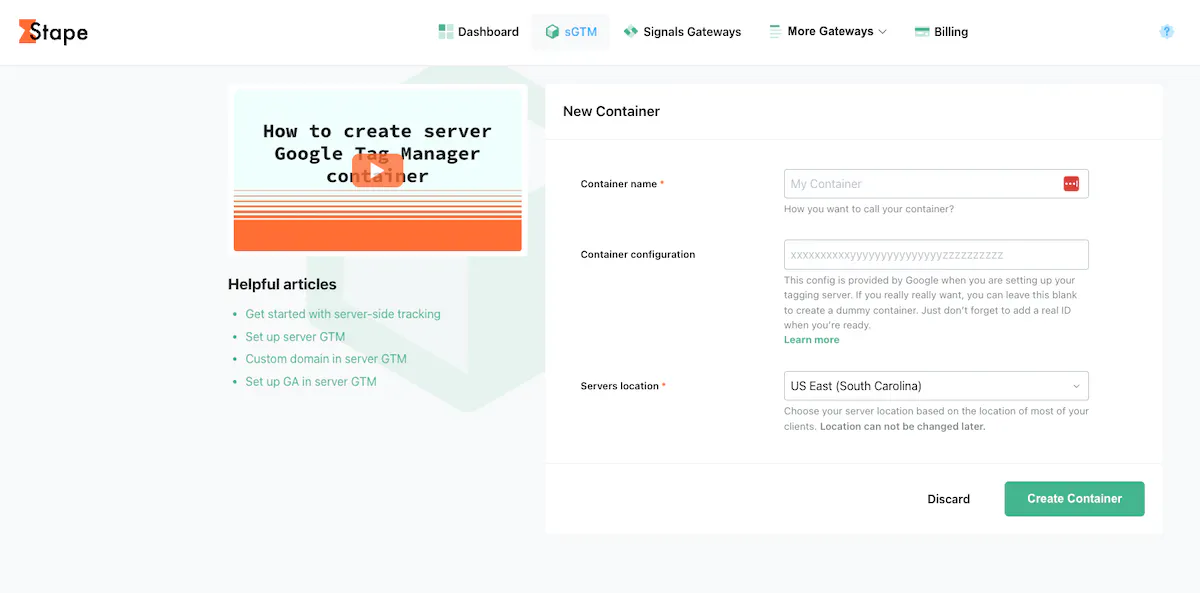
The main reasons users decide to look beyond Stape mostly fall into these categories:
- Implementation hiccups: Stape can be prone to setup issues such as missing conversions, inconsistent event firing, or container misconfigurations, all of which affect data accuracy and can be time-consuming to troubleshoot.
- Difficulty managing tracking logic: As setups become more advanced, maintaining containers, debugging errors, and coordinating developer support can become a bottleneck.
- Maintenance burden: Even after initial setup, Stape requires ongoing monitoring and occasional fixes when sGTM containers break or updates cause conflicts.
- Scaling challenges: When teams expand to multiple ad platforms, regions, or brands, Stape’s manual workflows and limited automation can make scaling inefficient.
- Compliance and performance limitations: The “host + container” model offers flexibility but lacks deeper privacy controls, governance features, and enterprise-grade performance compared to managed SaaS or CDP tools.
- Curiosity to compare alternatives: Many teams simply want to evaluate other tools to see what’s possible beyond the Stape framework.
Stape overview | Details |
|---|---|
Core use | Hosting for server-side Google Tag Manager (sGTM) |
Best for | Teams with in-house technical expertise or consultant support |
Key features | Shared cloud hosting, prebuilt CAPI templates, CMS plug-ins for Shopify, WordPress, Magento |
Pricing | Starts at $17/month; free tier available |
Limitations | Requires technical setup, maintenance, and debugging of server containers |
For teams looking for a server-side tracking solution better suited to their needs, we’ve tested, compared, and compiled a list of the best Stape alternatives. These range from truly plug-and-play solutions (like Tracklution) to enterprise-grade CDPs and advanced attribution platforms.
Learn more about each alternative’s pros & cons, pricing, features, and use cases below.
Tracklution vs Stape: The Full Comparison
Compare setup time, features, pricing, and maintenance — see how Tracklution and Stape stack up side by side.
Signs you should look beyond Stape
You might be better off searching for a Stape alternative if:
- You want a no-code setup that doesn’t require ongoing maintenance and costly dev resources.
- You’re tired of debugging sGTM containers or dealing with inconsistent event firing.
- You want a tracking solution that isn’t built on top of Google Tag Manager
- You need to feed cleaner conversion data back to multiple ad platforms automatically.
- You’re scaling fast and want to avoid hiring dedicated tracking engineers.
If that sounds familiar, the alternatives below are grouped by approach to help you find the right fit.
Categorising the Stape alternatives
Not every Stape alternative solves the same problem. Some focus on simplicity and automation, others on data governance or attribution modeling. To help you navigate, we’ve grouped the best options by their core approach.
Category | Tools | Best for |
|---|---|---|
Plug-and-play / No-code server-side tracking | Top choice: Tracklution Other options: Reaktion.com, Wetracked.io | Marketers & agencies who want instant, reliable tracking without developer time |
DIY / sGTM hosting | Top choice: sGTM (self-hosted) Other options: Taggrs, Addingwell | Technical teams who want control & flexibility |
Enterprise / CDP platforms | Top choice: JENTIS Other options: Tealium EventStream, Segment | Enterprises prioritising governance, orchestration, and compliance |
E-commerce tracking specialists | Top choice: Elevar Other options: ProfitMetrics | Shopify/WooCommerce brands focused on order-level accuracy & profitability |
Attribution & analytics platforms | Top choice: Hyros Other options: Triplewhale, Redtrack | Performance marketers seeking unified attribution and advanced dashboards |
Let’s break down these tools one group and alternative at a time.
You can also explore our comparison of top SST platforms in this guide to the best server-side tracking tools.
Plug-and-play / No-code server-side tracking tools
If you started with Stape or a self-hosted sGTM container, you’ve probably felt the pain of managing it: setup complexity, constant maintenance, and the risk of losing conversions whenever something breaks.
This first group of alternatives solves that exact problem. These are plug-and-play platforms: no servers to spin up, no containers to maintain, no debugging needed. They handle the heavy lifting for you, ensuring your ad platforms always receive clean, consistent, privacy-safe data.
1. Tracklution
Full disclosure: Tracklution is our own tool. We've included it because we genuinely believe it earns its place here, but we've done our best to evaluate every alternative through the same lens — strengths, limitations, and all.
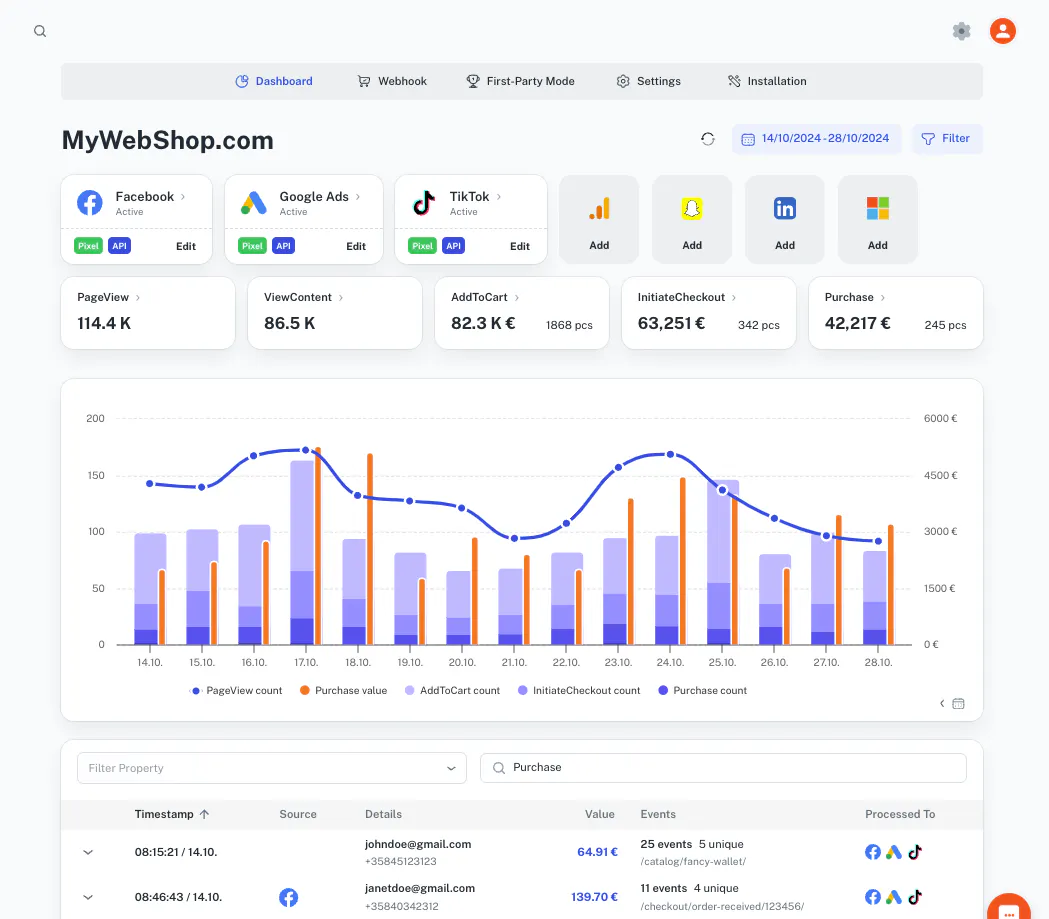
Tracklution is an all-in-one, no-code server-side tracking platform built specifically for advertisers, marketers and agencies running paid ads. It makes optimisation easier and more effective by delivering accurate, privacy-safe conversion data to ad platforms automatically. No servers, containers, or coding required.
What Tracklution does well
Tracklution was built to make server-side tracking radically simple, and it delivers on that promise:
- Five-minute setup. Connect your ad accounts, drop in one script, and you’re done. No container configuration or manual tag mapping.
- No-code data pipeline. Events are automatically processed server-side and sent to Google Ads, Meta, TikTok, LinkedIn and others with full privacy compliance.
- Always-on accuracy. Tracklution recovers on average 30 % more conversions compared with client-side tracking, thanks to first-party data handling and ad-blocker resilience.
- Zero maintenance. Nothing to host or patch, the system scales automatically.
- Clear reporting. Built-in diagnostics show what’s tracked and which platforms receive each event.
- Affordable. Transparent SaaS pricing and no hidden costs make it one of the most cost-effective ways to run server-side tracking.
- GDPR-compliant with long-term data retention. First-party data handling and EU-hosted infrastructure meet enterprise compliance requirements out of the box.
- Trusted across team sizes. Whether you're a lean agency or a mid-market brand with an internal marketing team, Tracklution's managed approach means no DevOps dependency and no IT bottleneck — you're live in minutes, not months.
Tracklution is essentially the “done-for-you” version of Stape, providing all the benefits of server-side tracking without the heavy upkeep.
This could be the right tool for you, if…
- You want accurate, server-side tracking without ever touching a GTM container.
- Your team prefers a marketing-first, no-code workflow with zero maintenance.
- You manage multiple ad platforms (Google, Meta, TikTok, LinkedIn) and need unified, reliable conversion data.
- You value a fast, plug-and-play setup that just works, even as you scale.
- You're an agency or mid-market brand that wants enterprise-grade accuracy without a 6-month implementation project.
Why you may want to consider other tools
- If your organisation already runs a heavily customised sGTM stack with bespoke data pipelines, and you need granular control over individual tag configurations, a self-hosted approach may offer more flexibility.
- If you need full-funnel customer data orchestration (CDP-level functionality such as Tealium or Segment), you may want something heavier.
- For Shopify-specific setups that need order-level enrichment and built-in profitability dashboards (e.g. Elevar or Reaktion), those specialised tools may add extra value alongside — or instead of — a general-purpose tracking layer.
Pricing
- Transparent SaaS pricing starting at around €30 / month, billed monthly or yearly, with no additional usage or server fees.
- Free trial available.
Start tracking accurately in 5 minutes → Get started with Tracklution
2. Reaktion
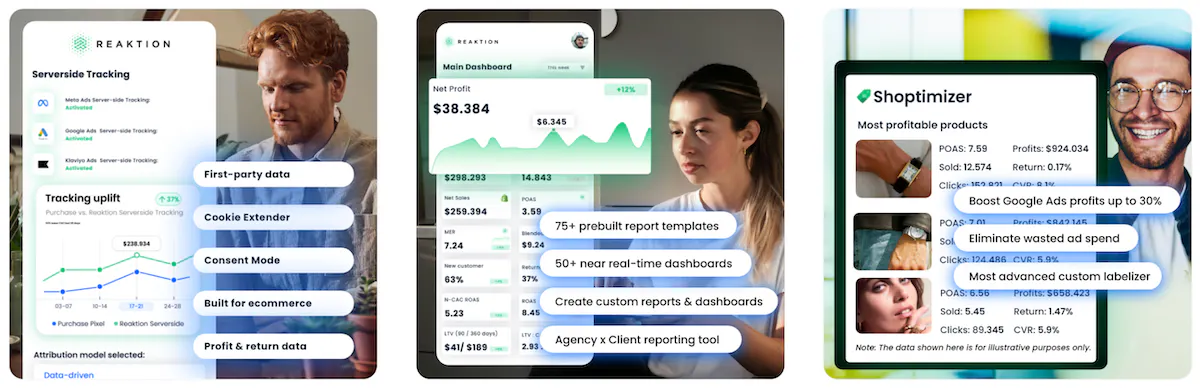
Reaktion is a Shopify-native tracking and analytics platform that unifies conversion accuracy and profitability insights. It connects server-side data to Meta and Google Ads while providing real-time profit and LTV dashboards.
What Reaktion does well
- 1-click installation via Shopify App Store, no developer involvement.
- Server-side CAPI + Google Ads integration that improves attribution reliability and reduces signal loss.
- Profit & LTV dashboards that combine sales, ad spend, and customer data to show real ROAS and lifetime value.
- Automatic product label enrichment for more granular campaign optimisation.
For merchants running paid social and shopping ads at scale, Reaktion’s native Shopify connection and built-in metrics can replace several separate tools.
This could be the right tool for you, if…
- You run a Shopify store and want to track true ROAS and LTV without extra reporting tools.
- You’re focused on profitability insights, not just conversions.
- You want an easy one-click setup with built-in Meta and Google Ads integrations.
Why you may want to consider other tools
- It’s eCommerce-only, and specifically tuned for Shopify; service-based or SaaS companies won’t benefit.
- Reporting is focused on profit metrics, not deeper cross-channel data modelling.
- Setup simplicity is high, but flexibility (custom events, multi-domain setups) is limited compared with Tracklution or JENTIS.
Pricing
- Shopify-native monthly plans tiered by order volume.
- Exact pricing depends on order counts; smaller stores start around $49 / mo, scaling to a few hundred dollars for larger volumes.
3. Wetracked.io
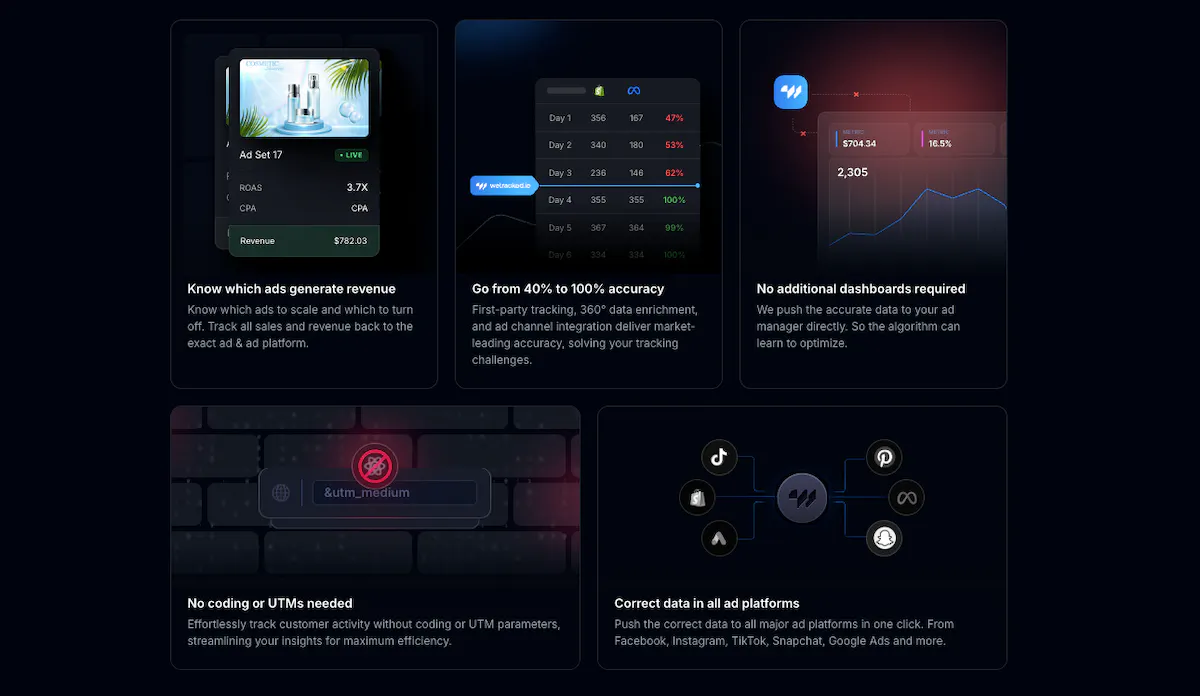
Wetracked.io is a lightweight server-side tracking solution for eCommerce marketers. It automates Meta Conversions API and Klaviyo event delivery with a simple, no-code setup for Shopify and WooCommerce stores.
What Wetracked.io does well
- One-click setup for Meta CAPI and Klaviyo server events (no code or GTM required).
- Easily handles multiple stores or ad accounts.
- GDPR-compliant European hosting and first-party cookie usage.
- Ideal for smaller shops that want reliable event delivery without technical overhead.
This could be the right tool for you, if…
- You use Shopify or WooCommerce and rely heavily on Meta Ads and Klaviyo automations.
- You want a simple, affordable way to fix tracking signal loss.
- You don’t need complex analytics dashboards, just reliable conversion delivery.
Why you may want to consider other tools
- It’s narrower in scope (focused on Meta + Klaviyo). If you also advertise heavily on Google Ads or TikTok, you’ll still need another layer.
- Limited analytics and no built-in dashboards beyond validation reports.
- Lacks advanced logic or cross-channel event mapping that tools like Tracklution include.
Pricing
- Plans start at $49 / month, with usage-based tiers as traffic grows.
- No setup fee; free trial available.
DIY / sGTM hosting tools
If you have developers in-house and want full control over how data flows between your site, your ad platforms, and your analytics stack, this is your category.
DIY and semi-managed sGTM hosting solutions built on Server-Side Google Tag Manager give you a flexible framework that lets you configure exactly what data is processed and where it’s sent.
The trade-off is that you’re responsible for configuration, scaling, maintenance, and debugging. These tools are flexible but require time, know-how, and continuous oversight – which generally translates into costly developer salaries or retainers.
This is also where Stape technically belongs. It’s the most common entry point into this category: a hosting layer on top of sGTM that simplifies deployment but still leaves you in charge of all container logic, maintenance, and troubleshooting.
Now let’s see what the other alternatives in this category have to offer.
4. sGTM (Self-Hosted)
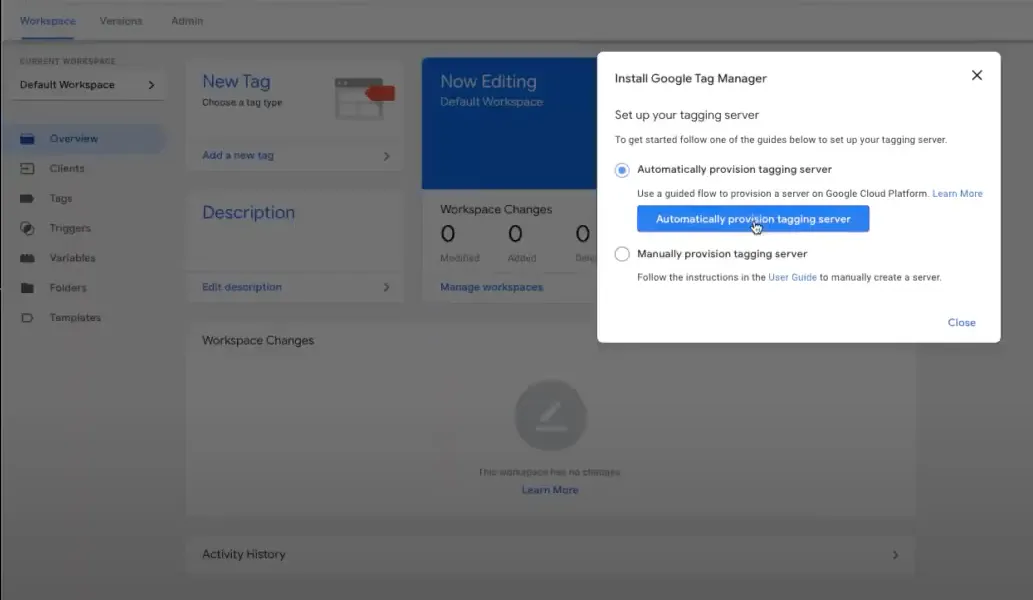
Self-hosting with sGTM containers gives you maximum control over tracking logic and data flow. It’s a fully manual but highly flexible approach for technical teams managing their own infrastructure.
What it does well
- Full control of server logic, data flows, and API connections.
- Ability to integrate directly with your own data warehouse, BI stack, or CDP.
- No vendor lock-in: everything runs in your own cloud account.
It’s the most powerful and transparent option, ideal for developers who like to build their own infrastructure.
This could be the right tool for you, if…
- You have strong internal DevOps and analytics resources.
- You need maximum flexibility or plan to integrate tracking deeply into your own data warehouse or CDP.
- You value full control and transparency over cost, convenience, or speed.
Why you may want to consider other tools
- Requires significant technical knowledge (DevOps, cloud, GTM).
- Manual setup, updates, and scaling take time.
- If something breaks, your team is solely responsible for fixing it. For many marketing teams, this overhead outweighs the flexibility.
This route makes sense for large organisations with internal analytics engineers, but it’s overkill for most marketing teams.
Pricing
- You pay only for your cloud hosting (typically Google Cloud App Engine).
- Expect to spend anywhere from $10 to $100+ / month, depending on traffic
- Account also for developer time (setup and ongoing maintenance).
5. Taggrs
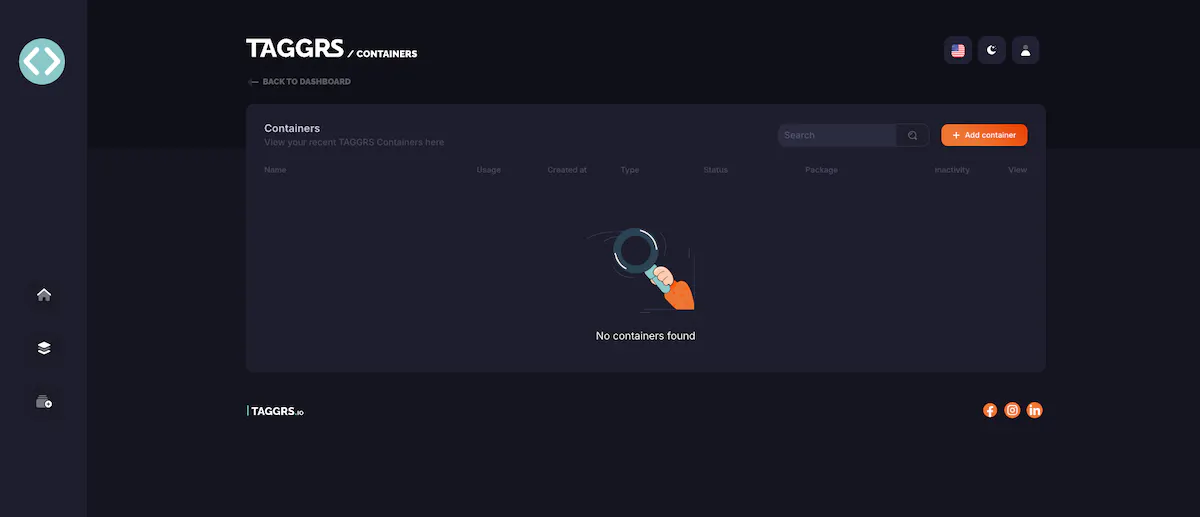
Taggrs provides managed sGTM hosting and an easier setup experience. It combines prebuilt templates, automated server creation, and an API for teams that want flexibility without heavy maintenance, blurring the line between developer-focused hosting and true SaaS solutions.
What it does well
- GDPR-compliant EU hosting out of the box.
- Ready-made GTM templates for Meta, GA4, Shopify, WooCommerce, and more.
- Flexible API for custom integrations and automation.
- Free tier up to 10k requests for testing or small sites.
It’s a simple, low-friction entry into the sGTM ecosystem. Good for small agencies or advanced marketers who want to experiment hands-on.
This could be the right tool for you, if…
- You like sGTM’s flexibility but want easier setup and maintenance.
- You’re a small agency or tech-savvy marketer experimenting with server-side tracking.
- You want affordable hosting with templates, automation, and compliance built in.
Why you may want to consider other tools
- Still built around Google Tag Manager; advanced setup knowledge is helpful for full flexibility.
- Doesn’t offer fully automated cross-platform syncing or native analytics dashboards like Tracklution.
- Better suited for technically comfortable marketers or teams managing multiple clients.
Pricing
- Free for up to 10k requests / month, then paid plans starting around €20–25/month, depending on volume.
- Simple and transparent, but you still pay with time and technical effort.
6. Addingwell
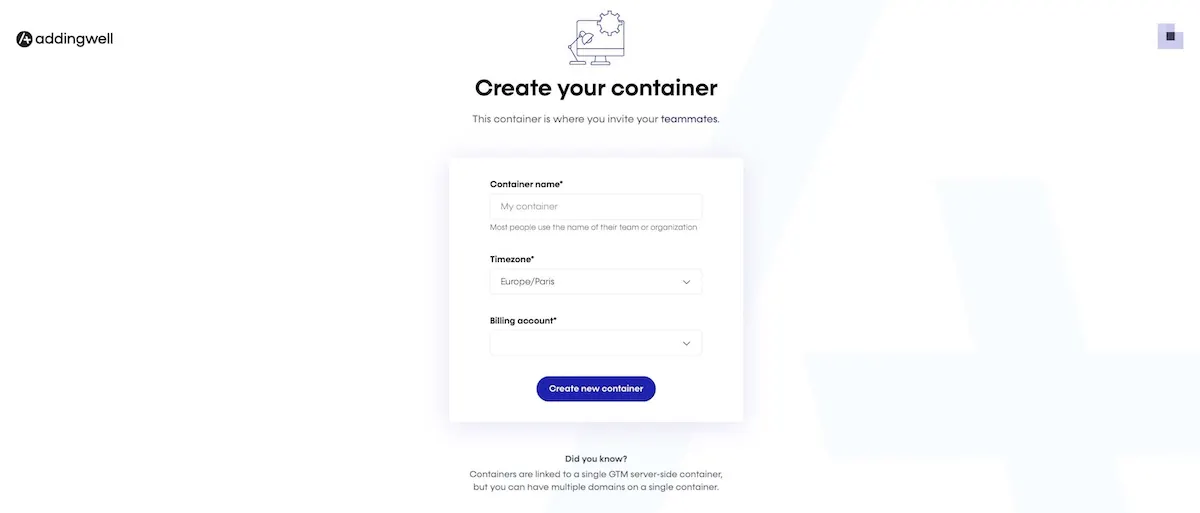
Addingwell is a developer-friendly sGTM hosting platform with a visual interface and managed infrastructure. It streamlines setup and debugging for teams who want control but prefer better tooling over pure DIY.
What it does well
- Provides managed infrastructure with a clean dashboard for logs and debugging.
- Supports both EU and US data centers.
- Visual UI simplifies tag configuration and server monitoring.
It’s a solid middle ground for developers who want control but appreciate better tooling.
This could be the right tool for you, if…
- You prefer a developer-friendly UI for managing multiple GTM containers.
- You want to offload server maintenance but still control your tagging logic.
- You need EU/US hosting flexibility and solid debugging tools.
Why you may want to consider other tools
- Still requires technical setup and upkeep.
- Lacks built-in event automation and direct ad-platform integrations.
- Not designed for non-technical marketing users.
Pricing
- Free Sandbox plan for testing and usage-based paid plans that scale with traffic.
- Public references show starting tiers around €90/month for roughly 2 million requests
- Expect costs similar to other shared-hosting solutions once scaled.
Enterprise / CDP platforms
While plug-and-play tools focus on simplicity and DIY setups prioritize flexibility, this group of alternatives is about scale, compliance, and data governance.
Enterprise-grade platforms combine server-side tracking with customer data platform (CDP) capabilities, connecting first-party data, consent management, and activation across channels.
These solutions are typically adopted by large organisations that already have data teams and complex compliance requirements.
7. JENTIS
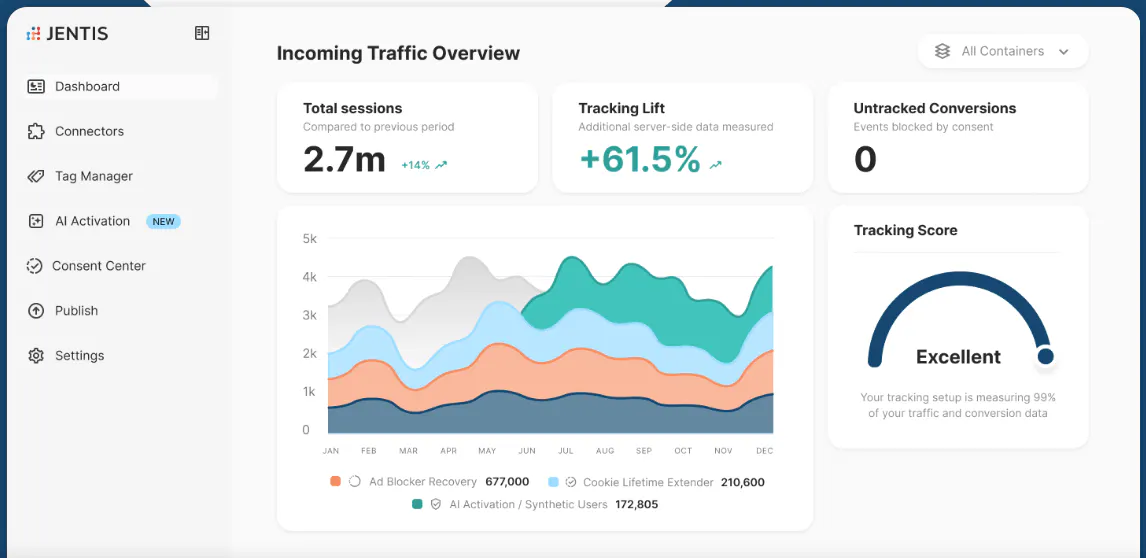
JENTIS is a privacy-first data and server-side tracking platform that combines server-side tag management with full data governance. It’s designed for enterprises that need compliant, first-party tracking and granular control over data processing.
What it does well
- Combines tag management, tracking, and consent tools in a single privacy-first platform.
- Provides raw-data access and anonymisation options for GDPR and ePrivacy compliance.
- Integrates with Google Ads, Meta, TikTok, and analytics tools while keeping data within EU servers.
- Strong governance features for enterprises that need auditable, compliant data flow.
It’s a serious solution for enterprises or public-sector organisations that can’t compromise on data control.
This could be the right tool for you, if…
- You operate in the EU or under strict data-protection policies.
- You need governance-grade control, raw-data access, and compliant first-party data pipelines.
- You’re an enterprise or public-sector organisation that treats data privacy as a strategic priority.
Why you may want to consider other tools
- Overhead: setup projects and onboarding can take weeks.
- Requires technical input from IT or data engineers.
- Pricing starts well above typical marketing-tool budgets.
- If you mainly need accurate ad tracking rather than enterprise governance, a managed platform like Tracklution may be more practical.
Pricing
- Published plans start at ~€490 / month for advanced server-side tracking
- Higher tiers and AI-powered data products are custom-quoted.
- Onboarding typically involves a paid implementation project.
8. Tealium EventStream
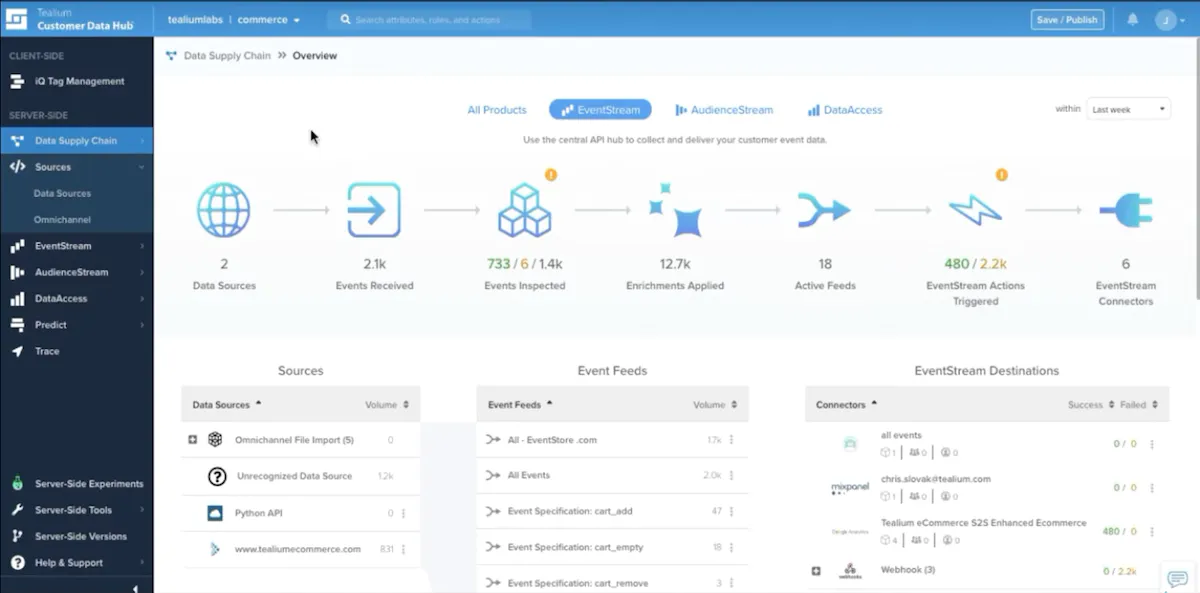
Tealium EventStream is part of the Tealium Customer Data Hub, enabling real-time server-side data collection, orchestration, and activation across marketing channels. It serves large organisations managing complex customer data ecosystems.
What it does well
- Real-time event API handling and audience segmentation.
- Strong identity stitching and consent controls.
- Integrates natively with Tealium iQ (client-side tag manager) and Tealium AudienceStream (CDP).
- Suitable for enterprises running omnichannel marketing and wanting end-to-end customer data orchestration.
This could be the right tool for you, if…
- You already use or plan to implement Tealium’s broader CDP stack.
- You need real-time orchestration across multiple marketing and analytics systems.
- You have an internal data team ready to support implementation and integration.
Why you may want to consider other tools
- Heavy setup: full implementation requires internal data and IT resources.
- High licensing cost compared with dedicated tracking tools.
- Overkill if your main need is conversion accuracy rather than cross-channel orchestration.
Pricing
- Tealium doesn’t publish pricing details; contracts are custom-quoted based on event volume and product mix.
- Expect enterprise-level pricing (typically in the thousands per month).
9. Segment
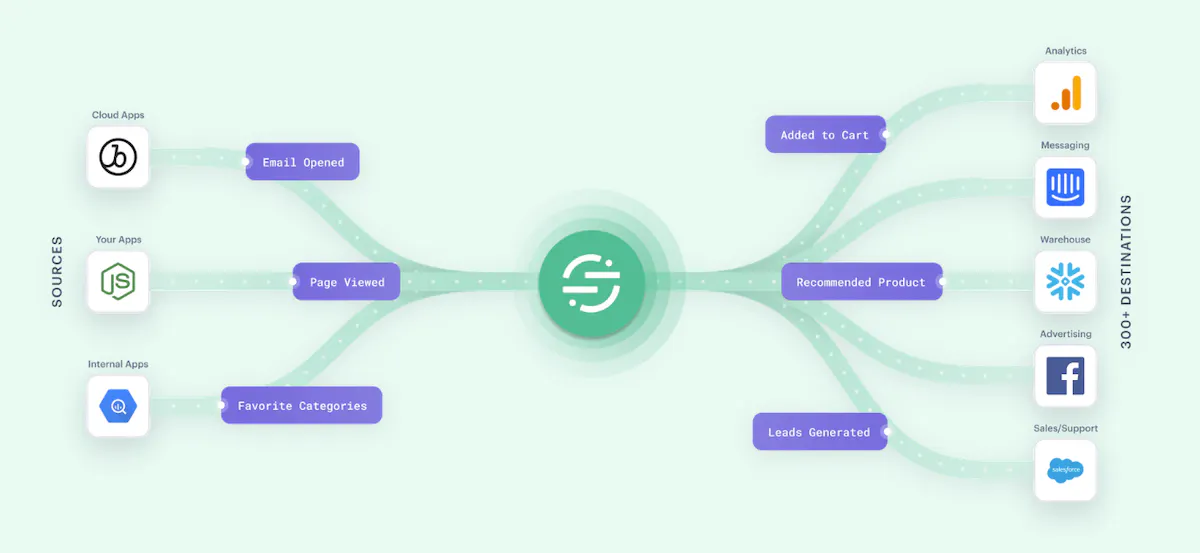
Segment, now part of Twilio, is a customer data infrastructure platform. It collects, unifies, and routes first-party data across hundreds of integrations for analytics, marketing, and product personalisation, and includes server-side event collection.
What it does well
- Real-time ingestion and routing of customer events from web, app, and server sources.
- Over 400 integrations with analytics, advertising, and engagement tools.
- Identity resolution and user profile building for personalised activation.
- Strong developer tools and APIs for flexible customisation.
It’s ideal for companies that want to unify customer data across multiple touchpoints and feed that data into various marketing and analytics systems.
This could be the right tool for you, if…
- You want to unify customer data across websites, apps, and back-end systems.
- You run a multi-channel tech stack and need hundreds of integrations managed in one hub.
- You have engineering resources to maintain data pipelines and custom destinations.
Why you may want to consider other tools
- Requires engineering resources to maintain data pipelines.
- Pricing scales quickly with event volume.
- May be too broad and complex for teams focused purely on ad tracking and conversion accuracy.
Pricing
- Segment offers a free developer plan
- Team plans starting around $120 / month
- Business (enterprise) tiers available by custom quote.
- Implementation and scaling costs can rise significantly with data volume.
E-commerce tracking specialists
For online stores, tracking challenges go beyond ad-platform conversions. You also need to understand profit margins, order value, repeat purchases, and the real performance of paid traffic.
This group of tools focuses specifically on e-commerce tracking and profitability, combining server-side event delivery with commerce-specific reporting.
10. Elevar
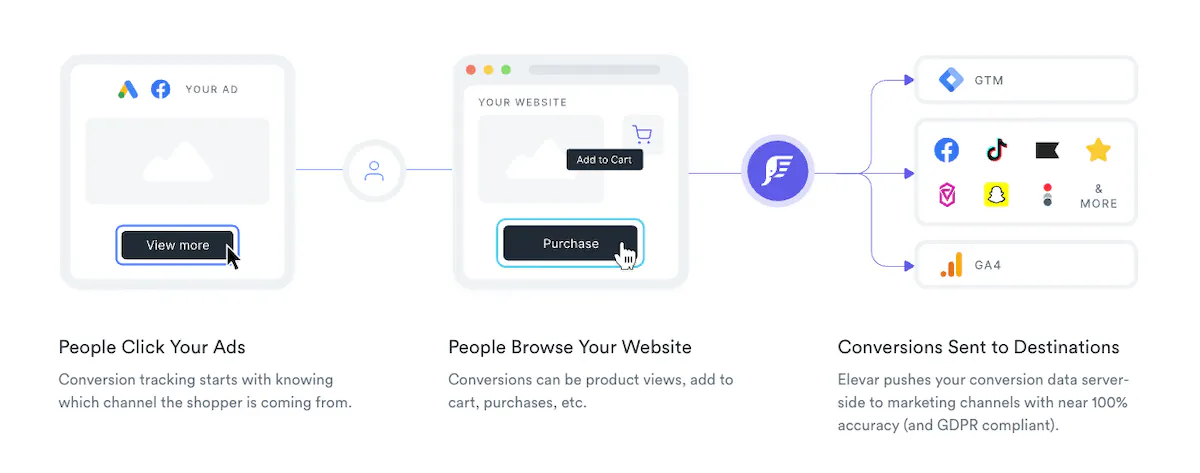
Elevar is a Shopify-focused tracking and analytics platform for stores that want full visibility into how paid traffic converts and what those conversions are worth. It combines server-side event delivery, advanced data layers, and reporting dashboards tailored for online stores.
What it does well
- Server-side tracking for Meta, Google Ads, and other major platforms, paired with a robust data layer.
- Order-level accuracy for subscription, multi-currency, and third-party checkout flows.
- Automatic event validation and alerting for tracking drops.
- Native Shopify app with step-by-step guided setup.
- Reporting dashboards that highlight conversion trends and attribution breakdowns.
For e-commerce businesses doing significant volume, Elevar brings enterprise-grade data accuracy in a merchant-friendly format.
This could be the right tool for you, if…
- You’re a Shopify merchant dealing with subscription, multi-currency, or off-platform checkouts.
- You want enterprise-grade accuracy in conversion tracking and event validation.
- You can invest time in onboarding to get detailed e-commerce analytics.
Why you may want to consider other tools
- Overhead: setup takes time and typically involves onboarding support.
- Primarily Shopify-centric; not ideal for non-Shopify or service-based sites.
- Considerably more expensive than plug-and-play solutions like Tracklution for smaller merchants.
Pricing
- Plans start at ~$200 / month for stores processing up to 1 000 orders per month, scaling up to ~$950 / month for higher volumes.
- Optional expert onboarding (~$1 000+) and support add-ons are available.
11. ProfitMetrics
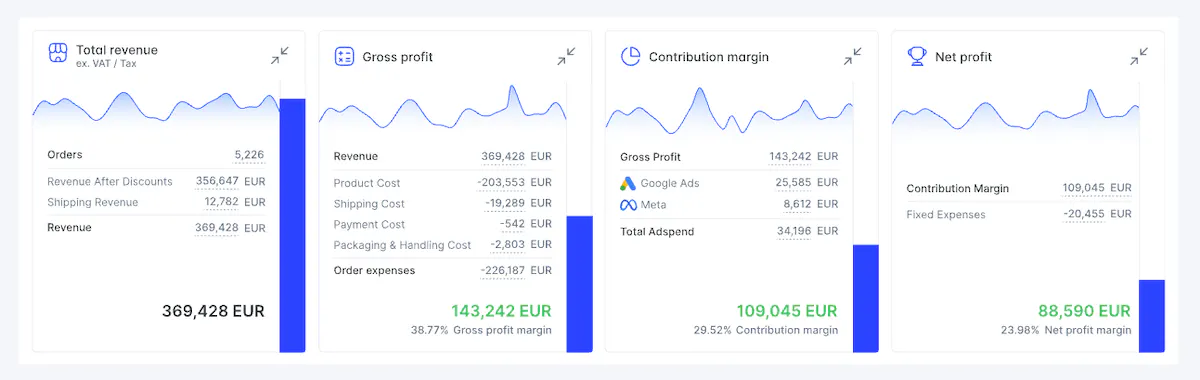
ProfitMetrics helps merchants measure what truly matters: profit. It calculates margin per order and feeds real profit data into ad platforms, allowing stores to optimise campaigns based on profitability instead of revenue.
What it does well
- Calculates profit after costs (COGS, shipping, discounts) for every order.
- Pushes profit data back into ad platforms to optimise for real ROAS instead of revenue alone.
- Integrates with Shopify, WooCommerce, and major ad networks.
- Simple dashboard to monitor margin trends and profitability per campaign.
It’s a solid complement to tracking solutions, helping marketers understand which sales truly drive profit.
This could be the right tool for you, if…
- You want to optimise campaigns for profit, not just revenue.
- You need to see how each order and channel contributes to actual margin.
- You already have tracking in place but lack visibility into profitability per campaign.
Why you may want to consider other tools
- Doesn’t replace full server-side tracking.
- No built-in CAPI management or event processing.
- Limited analytics outside profit and ROAS metrics.
Pricing
- Usage-based pricing depending on order count and data volume (exact tiers vary by store size).
- Free trial available.
Attribution and analytics platforms
This final group approaches the Stape alternative question from a different angle. Rather than focusing on infrastructure or data delivery, these tools specialise in multi-channel attribution, performance insights, and reporting.
They often include some server-side tracking features but are primarily analytics and optimisation platforms, which makes them ideal for marketers who want to understand why conversions happen and which channels drive them.
12. Hyros
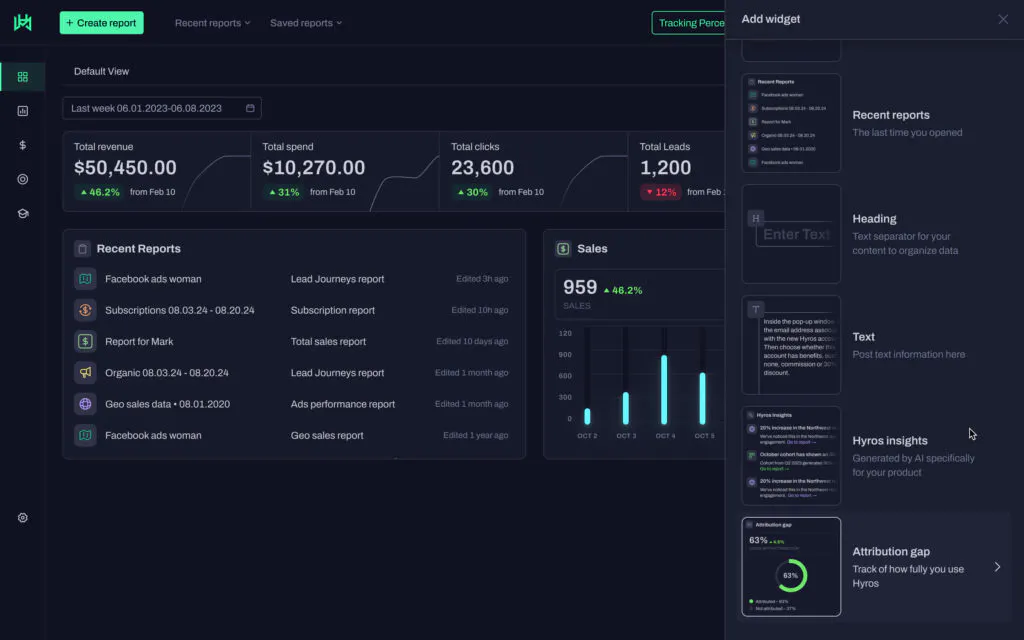
Hyros is an AI-driven attribution platform that connects ad, CRM, and call data to reveal which campaigns actually generate revenue. It’s used by high-spend advertisers seeking a unified view of marketing ROI.
What it does well
- Uses AI-based attribution models to consolidate data from ads, calls, emails, and CRM systems.
- Tracks multi-step funnels and offline conversions.
- Provides revenue attribution and ROI metrics across all major ad platforms.
- Suitable for agencies or high-spend advertisers running multiple channels.
For teams that already have tracking in place but lack attribution clarity, Hyros fills that gap.
This could be the right tool for you, if…
- You’re a performance marketer managing multiple ad platforms and funnels.
- You want AI-driven attribution that links ad, CRM, and call data in one place.
- You already have accurate tracking but need to understand which channels truly drive ROI.
Why you may want to consider other tools
- Focuses on attribution reporting, not server-side event delivery.
- Integration complexity and setup time can be significant.
- Premium pricing puts it beyond reach for smaller advertisers.
- Data quality ultimately depends on external tracking sources (it doesn’t replace them).
Pricing
- Custom, revenue-based pricing rather than fixed tiers.
- Public reports show entry-level plans starting around $230/month for smaller businesses, with higher tiers scaling alongside tracked revenue or complexity.
- All plans are custom-quoted following a product demo.
13. Triplewhale
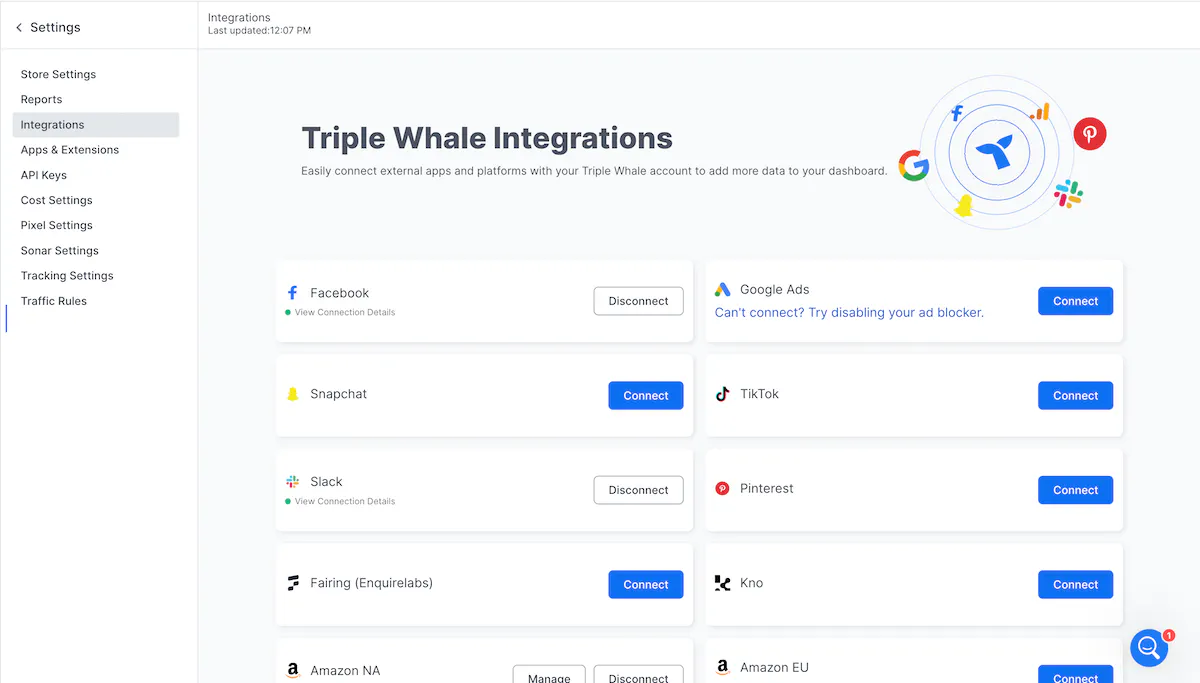
Triplewhale is a Shopify analytics and attribution suite built around its proprietary Triple Pixel. It blends client- and server-side tracking with profit, cohort, and creative performance insights for eCommerce brands.
What it does well
- Combines client- and server-side tracking via its Triple Pixel technology.
- Provides dashboards for profitability, cohort analysis, and creative performance.
- Includes AI-based anomaly detection and ad creative insights.
- Seamlessly integrates with Shopify, Meta, and Google Ads.
It’s particularly strong for marketing teams that need to see both ad results and business metrics (LTV, AOV, profit) in one view.
This could be the right tool for you, if…
- You’re a Shopify brand running multiple ad channels and want all metrics in one dashboard.
- You want deep insight into cohort behaviour, creative performance, and profit trends.
- You prefer an intuitive analytics platform built for e-commerce marketers.
Why you may want to consider other tools
- Like Hyros, its tracking layer is secondary; designed to feed attribution, not manage tags.
- Primarily built for Shopify; less relevant for other platforms.
- Some users report differences between platform-reported and Triplewhale-reported data due to model variance.
Pricing
- Based on annual store GMV (gross merchandise value) rather than a fixed flat rate.
- Public listings show plans starting around $1,000+/month for mid-sized brands, with higher-volume stores paying more.
- Free and smaller-store tiers may exist, but most pricing is provided via sales consultation.
14. Redtrack
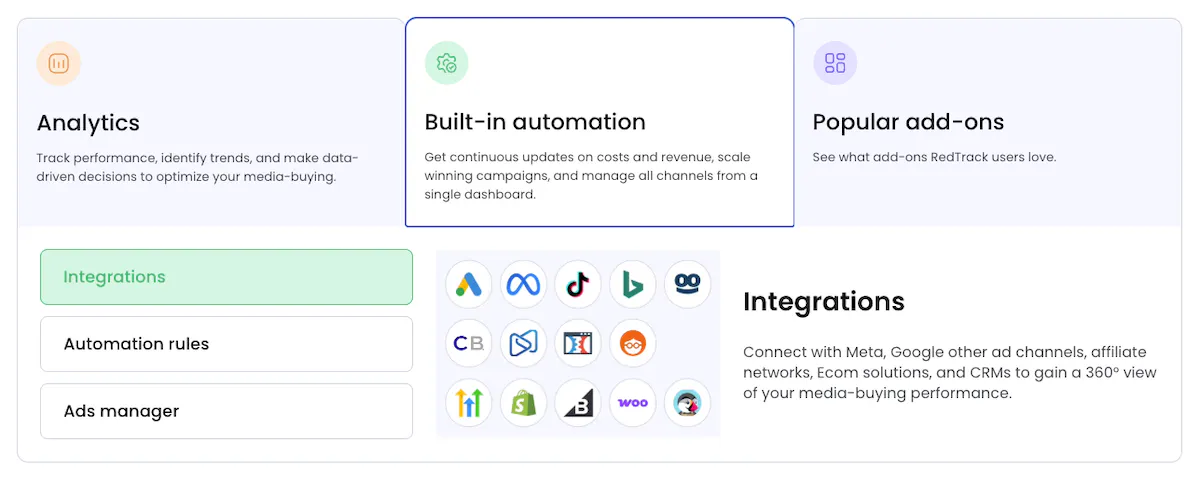
Redtrack is a performance-marketing platform combining cross-channel attribution, conversion tracking, and automation. It’s used by agencies and media buyers managing large multi-platform ad portfolios.
What it does well
- Supports 20+ conversion types and cross-channel tracking (Meta, Google, TikTok, affiliate networks).
- Offers automation rules for campaign optimisation and traffic distribution.
- Real-time reporting dashboards for performance and ROI tracking.
- Includes API-based integrations and postback support.
It’s one of the few attribution tools that also includes configurable tracking features.
This could be the right tool for you, if…
- You manage high-volume campaigns across multiple ad networks or affiliates.
- You want detailed attribution plus automation and traffic-distribution rules.
- You’re comfortable working with technical setup and advanced optimisation tools.
Why you may want to consider other tools
- Broad but complex; setup and learning curve can be steep.
- Heavy on performance-marketing features, less so on plug-and-play simplicity.
- Not ideal for general marketers or teams wanting a visual UI and minimal setup.
Pricing
- Plans start at $149 / month (Solo)
- Higher tiers such as Team ($399) and Enterprise ($999) offer more automation and traffic capacity.
- Each plan includes event or usage caps, and custom pricing is available for large-scale setups.
- Free trial available.
Choosing the right Stape alternative
After comparing all major Stape alternatives, from DIY hosting to enterprise CDPs, it’s clear that there’s a pattern: the right tool depends on how much control, complexity, and maintenance you’re prepared to take on, and what your primary use case actually is.
- If you have an engineering team that loves fine-tuning data pipelines, self-hosted sGTM or Addingwell give you total control.
- If compliance, data sovereignty, and raw-data access are your primary buying criteria, JENTIS or Tealium specialise in that space.
- If you're managing a Shopify store and need order-level profitability dashboards, Elevar or Triplewhale are purpose-built for that.
And if the goal is accurate, maintenance-free server-side tracking that works across ad platforms without developer dependency, that's the space Tracklution was designed for — whether you're a solo marketer, a multi-client agency, or a mid-market brand.
Ready to simplify your server-side tracking?
Start your free trial and see accurate conversion data flowing in minutes — no containers, no code, no maintenance.
Related posts
Questions and answers
What does Tracklution actually do?
Tracklution sends conversion data directly to ad platforms (Meta, Google Ads, TikTok, etc.) through server-side APIs. Instead of relying on browser pixels that get blocked by ad blockers, iOS privacy changes, and cookie restrictions, your data goes server-to-server. The result: ad platforms see more of your real conversions, their algorithms optimize better, and you get better ROAS.
What is server-side tracking?
Server-side tracking gathers first-party data directly on your website and sends tracking events to ad platforms via Conversion APIs. This approach bypasses restrictions from iOS devices, ad blockers, and privacy-focused browsers, providing more accurate data and making your paid advertising more efficient.
Is it just one setup that feeds data into all my ad platforms?
Yes. You install Tracklution once, connect your ad accounts, and it sends conversion data to all platforms simultaneously through their respective APIs (Meta CAPI, Google Ads API, TikTok Events API, etc.). No need to manage separate server-side setups for each platform.
How much more conversion data will my ad platforms actually see?
On average, clients report 34.2% more conversions compared to traditional browser-based pixels. This means the ad algorithms have significantly more signal to work with, which translates to 15-35% lower customer acquisition costs for most clients.
Do I need developers to set this up?
No. Setup takes 5-15 minutes depending on your platform. For Shopify, WooCommerce, and other supported platforms, it is plug-and-play. You do not need custom coding or engineering resources. For GTM users, you can keep your existing setup and add Tracklution alongside it.
Do I need to remove my existing tracking tags?
Not necessarily. Tracklution works alongside your current setup. You can run both in parallel initially to compare data, then decide whether to simplify.
What about the DNS / CNAME setup?
Tracklution uses a first-party CNAME record on your domain for data collection. This takes a couple of minutes to configure and up to 48 hours to propagate. It is what makes the tracking resistant to ad blockers and browser restrictions.
Can I verify that the data is actually more accurate?
Yes. Run Tracklution alongside your existing tracking and compare. The dashboard also shows "recovered events" so you can see exactly how many conversions would have been missed without server-side tracking.
Can I distinguish between organic and paid traffic?
Yes. Tracklution preserves traffic source attribution. The conversion data sent to each ad platform includes the proper attribution parameters.
What about offline conversions (phone calls, in-store, CRM events)?
Tracklution supports offline conversion tracking through webhooks and CRM integrations. If someone clicks an ad, then converts offline, you can feed that back to the ad platforms. Clients using this see up to 35% reduction in acquisition costs because the algorithms learn from the full conversion picture.
How does this work with cookie consent and CMP tools?
Tracklution supports both Basic and Advanced Consent Mode. It reads your CMP data layer automatically and respects user consent choices. In Advanced Consent Mode, it can still collect anonymized, cookieless data when users decline cookies, which helps ad platform modeling without violating privacy rules. Fully GDPR-compliant.
How is this different from Stape or building your own sGTM setup?
Stape provides server-side GTM hosting, which means you still need to build and maintain the tags, triggers, and configuration yourself. Tracklution is a complete solution: plug-and-play setup, automatic event detection, built-in consent management, a real-time analytics dashboard, and ongoing maintenance of all API connections. When ad platforms change their APIs (which happens often), we handle the updates.
How does the agency partner model work?
Single dashboard to manage all client accounts. Each client has their own tracking container. The platform handles all technical maintenance, so you are not stuck troubleshooting API changes or broken tracking.

Have further questions?