“Don't overcomplicate it”: how ScotlandShop cut cost per acquisition
Tartan retailer serving customers across the world, ScotlandShop saw its online ad costs climb yearly with no clear understanding as to why it was happening. And without a way to differentiate potential customers from returning ones, advertising algorithms were left guessing, consuming the ad budget in the worst way possible. After testing two other tracking approaches, both of which fell short, ScotlandShop landed on Tracklution.

15–20% lower cost per acquisition
since switching to Tracklution
Implementation in minutes
done by ScotlandShop's own developer
£5,000 saved upfront
versus a bespoke tracking build
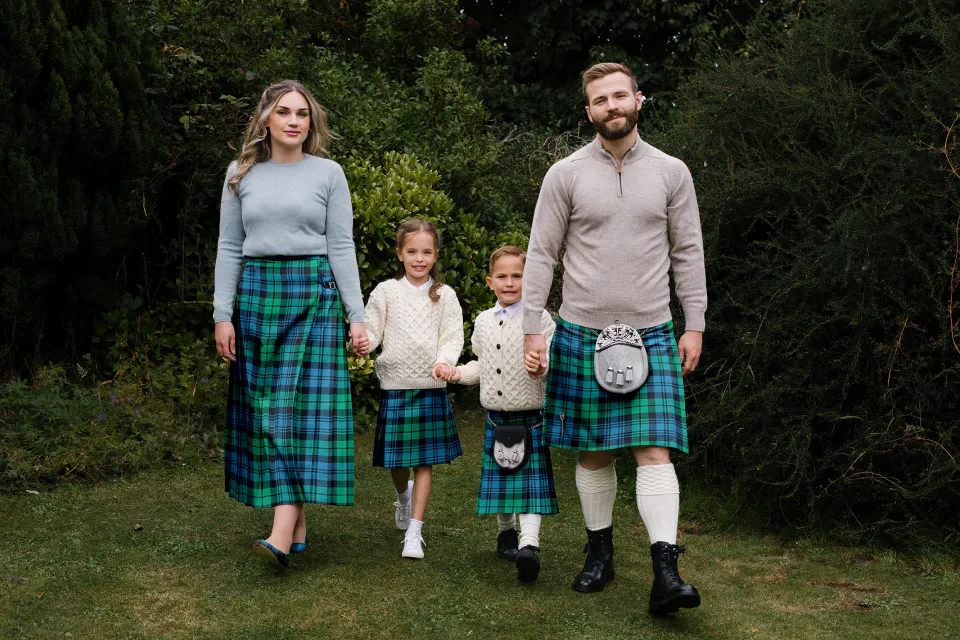
ScotlandShop has been the go-to source for custom tartan since 2002, with over 500 tartans to choose from, made to order clothing, home interiors, and gifts, shipped anywhere in the world. What started as one website in one language now comprises a 9 language website, 3 stores, including one location in the USA, and headquarters in Scotland. .
This story was written in collaboration with John Cove, Marketing Manager at ScotlandShop.
The tracking challenge they faced
ScotlandShop runs on something slightly harder to track than what you’d call normal impulse purchase: heritage. Oftentimes, customers come to them to trace a surname back to a clan, find the right tartan for a region their family left generations ago, and turn that into a kilt, a jacket, or a cushion for their living room.
In short, that kind of buyer often doesn’t convert on the first visit, which makes knowing where they actually came from even more difficult.
Note that the team splits its attention across organic SEO, an active presence on Facebook and Instagram, Google Shopping, and 3 physical stores that all feed into the same brand.

A budget that kept rising without a clear answer for “why”
Meta and Google Shopping carry a substantial share of ScotlandShop’s ad budget. And for a while, the ad spend kept climbing without a clear answer for why.
"
When you started to look at our cost per conversion, what we were spending and what we were getting back, when we did year-on-year comparisons, the data was quite alarming. It felt like the cost was just spiraling.
John Cove, Marketing Manager at ScotlandShop
And the problem only got worse when Meta rolled out its Andromeda update at the end of 2024 and throughout 2025.
Andromeda is Meta's latest ad-matching engine. It uses AI to score and match ads to buying-journey stage and intent rather than broad audiences. It leans hard on data quality. And so, if the signals feeding it are incomplete, it has to guess.

The algorithm needed to know who was a new customer and who was already coming back, or it would keep guessing.
At the time, ScotlandShop couldn’t make that distinction, and every visitor looked the same to the platform, whether they already logged 3 purchases over the past years, or landed on the website for the first time.
Trial and error: a journey to find the right service provider
That journey wasn’t exactly easy.
The first attempt came through a recommendation from their PPC agency: an edge-tagging tool that promised to solve the attribution gap.
They gave it a shot.
It didn’t work out.
And after weeks of back and forth calls between ScotlandShop, its developers, and the vendor's team, John decided to pull the plug to explore another path: a custom build with an outside developer, using a different infrastructure setup.
The technical approach was sound and the developer clearly knew the space, but the implementation cost alone wasn’t justifiable. The quote landed at roughly £4,000 to £5,000 upfront, all before anyone could say what it would actually return.
"
What are the returns on your £4,000? The honest answer to the question is, I don’t know. And that’s no good.
John Cove

That's when John found Tracklution.
ScotlandShop started on Tracklution's 14-day free trial, no credit card required, and left the implementation to their own developer.
"
Within about 10 minutes he'd come back to me and said, this is great, this is simple, this is straightforward.
John Cove
That reaction did more to convince John than any sales deck could have.
- No upfront cost
- Transparent pricing
- No lengthy sales process
For a 30-people team without a dedicated engineering department, that combination mattered as much as the technology itself.
15 to 20% improvement on cost per acquisition since implementing Tracklution
Tracklution went live, … and it did what it was supposed to.
Now, putting an exact number on the impact from Tracklution is tricky, and John explains why: “we rarely change one thing at a time”.
Creative, copy, targeting, and seasonality all move together, sometimes five or six variables at once, which makes before-and-after comparisons close to impossible. However, even with that in mind, the trend is clear enough for John to trust that Tracklution had a positive impact on ScotlandShop’s advertising performance.
"
Tracklution has certainly had a positive impact. I would be comfortable with a ballpark percentage of 15 to 20%, certainly in that region, as a saving.
John Cove
With more complete data flowing to Meta, ScotlandShop also changed its approach to creative, now building ads for distinct stages of the buying journey instead of treating every visitor the same, with more confidence that the right ad reaches the right person.
The next step: Feeding Tracklution offline data from the stores
The next phase is already underway: feeding offline data from the 3 physical stores into Tracklution, to send more complete and accurate data through Tracklution for the algorithms to provide even sharper targeting.
Long story short: “don’t overcomplicate it”
John's advice starts with a warning about his own instincts.
"
My biggest learning is don’t overcomplicate it. If I had my time again, I would have stopped that first process much more quickly and just said, whoa, this is way too complicated for what we need. Goodbye.
John Cove
As we were wrapping up, John landed on what might be the most important point of the whole conversation.
"
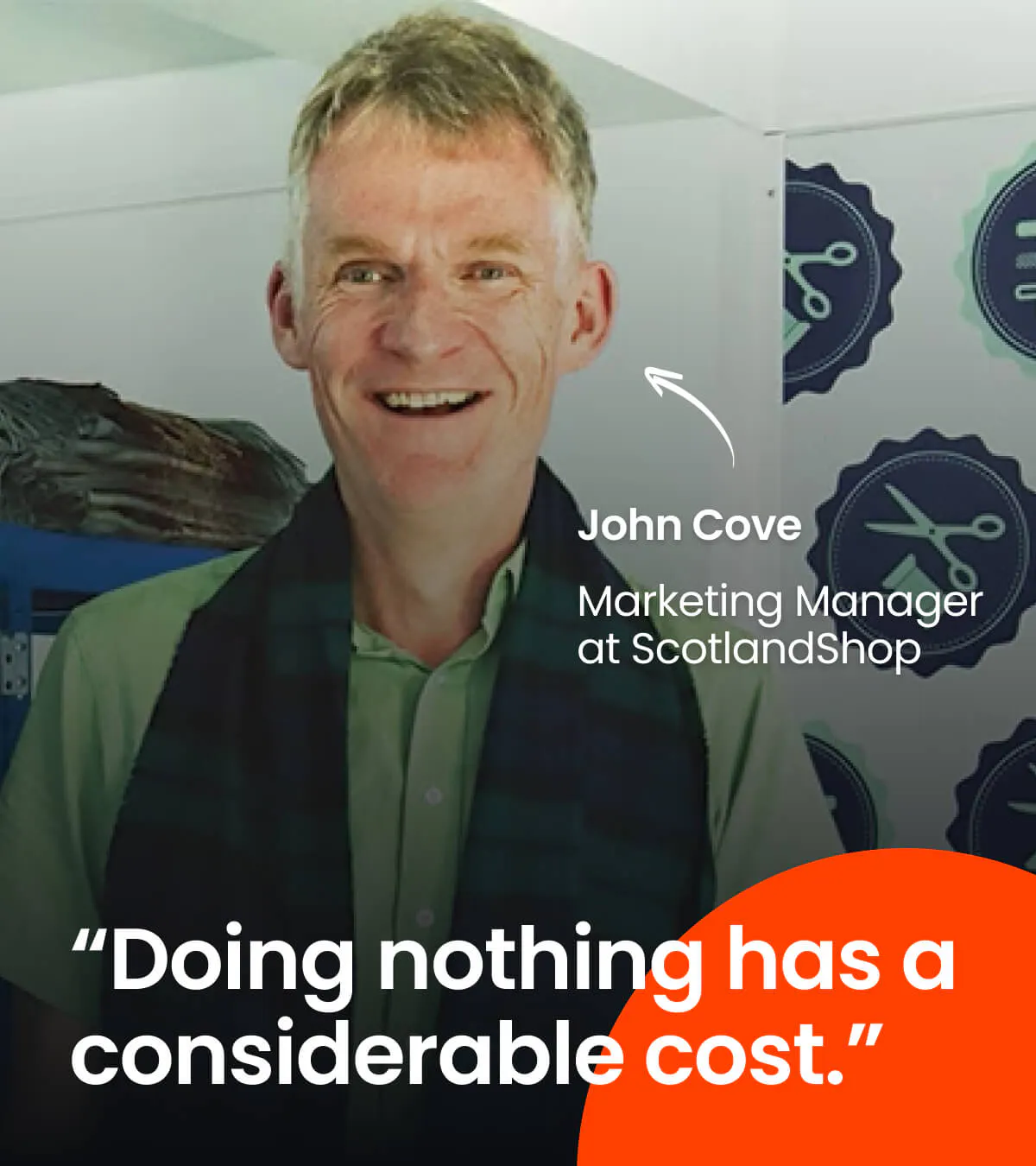
Doing nothing has a considerable cost. You may not get an invoice for doing nothing, but I’m absolutely clear that doing nothing has a considerable cost.
John Cove
No invoice, but a real cost all the same. That's about as blunt as advice gets.
Ad costs climbing and you don't know why? Try it free. 16-minute setup.
Tracklution gives Meta and Google the customer data they need to stop guessing. 16-minute setup, no large upfront spend, no six-figure custom build.
No credit card needed