Marketing Spend Optimization: How to Get More From Shrinking Budgets
Learn the biggest sources of wasted marketing spend and a solid framework for optimizing your budget, improving ROAS, and preventing spend on underperforming activities.

Table of contents
Better data.
Set up server-side tracking in minutes with Tracklution. Send better conversion data to your ad platforms so their algorithms can optimise for better results from your budget.
Start your free trialWith flat budgets and rising media costs, optimizing marketing spend isn’t optional anymore. Here’s a practical way to cut waste and make the most of your marketing budget.
Today’s marketing teams are under pressure to deliver more without spending more. Gartner's 2025 Chief Marketing Officer (CMO) Spend Survey found that budgets have plateaued at 7.7% of company revenue, and over half of CMOs say that’s not enough.
At the same time, media costs keep rising. Every dollar buys less reach than it did last year, which makes any wasted spend hit harder. According to Lunio's 2026 Global Invalid Traffic Report, $63 billion in digital ad spend was lost to invalid traffic in 2025. And that’s just one way marketing budgets go to waste.
When you can't grow your budget, the only option is getting more from what you're already spending.
This guide covers where digital marketing budgets typically go wrong, a practical five-step framework to fix it, and why reliable data is the foundation of any effective marketing strategy:
- What is marketing spend optimization?
- Where marketing budgets go to waste
- A 5-step framework for marketing spend optimization
- FAQs
What is marketing spend optimization?
It’s the ongoing process of analyzing how your budget is distributed across marketing channels, evaluating campaign performance, and reallocating budget based on results. It's not a one-time audit or simple cost-cutting exercise, but an iterative, data-driven practice that makes your marketing efforts more efficient over time.
Marketing spend optimization works at two levels:
- Strategic allocation: Which channels and activities deserve a budget at all.
- Tactical efficiency: How that budget performs within each channel. Which campaigns, creatives, and bid strategies are driving results, and which are just consuming spend?
Where marketing budgets go to waste
Most waste doesn’t come from one marketer’s bad decision, but from a few different sources.
1. Over-investing in underperforming channels
A common but expensive habit in digital marketing is treating last year’s budget as this year’s starting point. McKinsey calls these budgets “close cousins of years past”—money that gets locked into underperforming channels because nobody stopped to question them.
The fix? Zero-based budgeting, where every channel starts at zero and justifies its spend each cycle. McKinsey’s research found that companies willing to get granular about where their budget is going can recover 10-20% of marketing spend by cutting channels that aren’t earning their place. Reinvested into higher-performing channels, those savings can drive 5-10% growth, according to McKinsey.
2. Measuring the wrong metrics
Many marketing teams are drowning in data, but tracking the wrong performance metrics. 64% of marketing leaders say proving the financial impact of their work is their biggest challenge, and only 22% of marketers feel they can justify their value to the chief financial officer (CFO).
It’s easy to optimize for clicks, impressions, and last-click conversions and feel like things are working, while your actual return on investment (ROI) suffers. Vanity metrics have their role in giving you context, but they're not worth making budget decisions around. Instead, digital marketing metrics like return on ad spend (ROAS), customer acquisition cost (CAC) and profit on ad spend (POAS) give you a clearer view of business outcomes and overall profitability.
3. Fragmented data across platforms
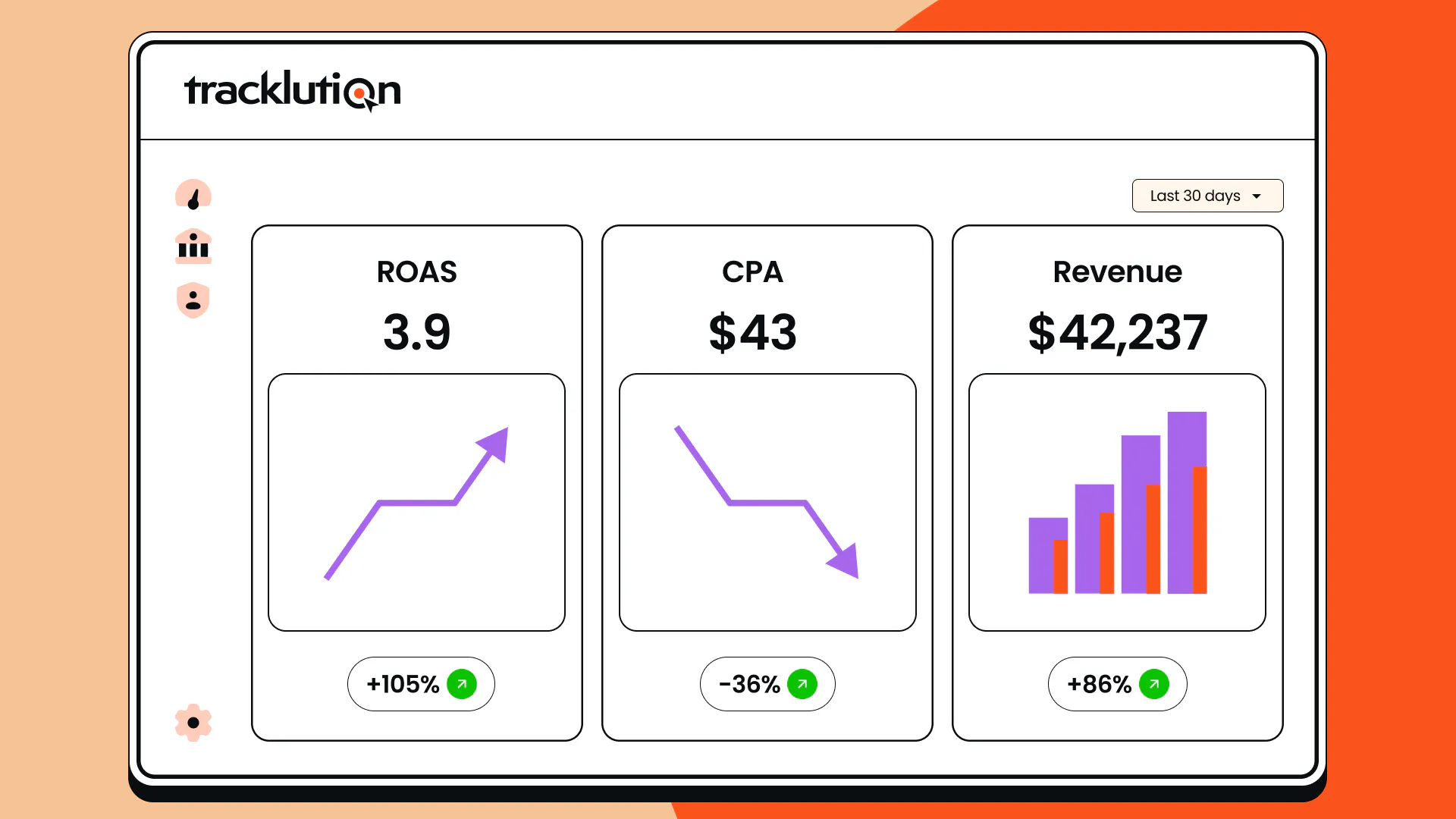
When your data is siloed across platforms like Meta Ads Manager, Google Ads, Google Analytics 4 (GA4), and your CRM, you're not seeing the full picture. Each platform uses its own attribution logic and tells a different story about the same sale. That’s just how they’re built.
The problem is that without a unified cross-channel dashboard, you can’t track the full customer journey or compare channels on equal footing. Gartner’s 2025 Marketing Technology Survey found that martech now makes up nearly 22% of total marketing spend, yet only 49% of tools are actively used. And just 15% of organizations qualify as high performers, defined as those that meet strategic goals and demonstrate positive ROI through their use of martech. So most teams are spending a big chunk of their budget on tools but not getting nearly enough out of them.
Anni Salo, CEO at Tracklution, explains, “You don’t need to master every platform feature, but you do need to know why your numbers look the way they do. If you can’t explain the gap between platforms and your backend, you’re optimizing on assumptions, not reality.”
4. Invalid traffic and ad fraud
How much of the traffic hitting your marketing and ad campaigns is real? Most marketers know ad fraud exists but underestimate how much it’s costing them. When bots, scrapers, and click farms register as real visits, they feed corrupted signals into your bidding algorithms and drain your budget.
The average invalid traffic rate is 8.51% across all channels (with TikTok at 24.2% and LinkedIn at 19.88%), according to Lunio's 2026 Global Invalid Traffic Report. And this figure is expected to rise as AI-powered bots become more sophisticated.
5. Hidden spend with no visibility
Some waste is simply invisible. For example, Google Ads’ infamous “other search terms” category—spend attributed to queries the platform doesn’t disclose—can account for a large share of total budget with no way to see what triggered the spend.
Jesse Bartels, Chief Smile Officer at Orthoclear, experienced this firsthand. The category was consuming 20–30% of their total Google Ads budget. After fixing their tracking and improving attribution clarity, they cut CAC by 30%, reduced total ad spend by 20%, and tracked 100% of appointments from click to booking.
“Now we know exactly which campaigns drive real appointments—and we’ve cut acquisition costs by more than 30% while keeping bookings steady,” says Bartels.
6. Not leveraging—or blindly trusting—automation
There are two sides to the automation coin, and both can cost you. The first? Avoiding AI-driven automation altogether. Manually managing bids across huge accounts is slow and error-prone, and platform automations can optimize much faster, personalize in real time, and forecast outcomes.
The second is handing everything to automated systems (like Smart Bidding, Performance Max, and Advantage+) and assuming it’ll figure everything out for you. Yes, the automation is powerful, but it’s only as good as the data it receives.
"Automation shifts the job from 'managing campaigns' to 'managing inputs.' Marketers need to deeply understand what signals they send—conversion events, values, attribution models—because that's what algorithms optimize against."— Anni Salo, CEO at Tracklution
7. Incomplete tracking and data loss
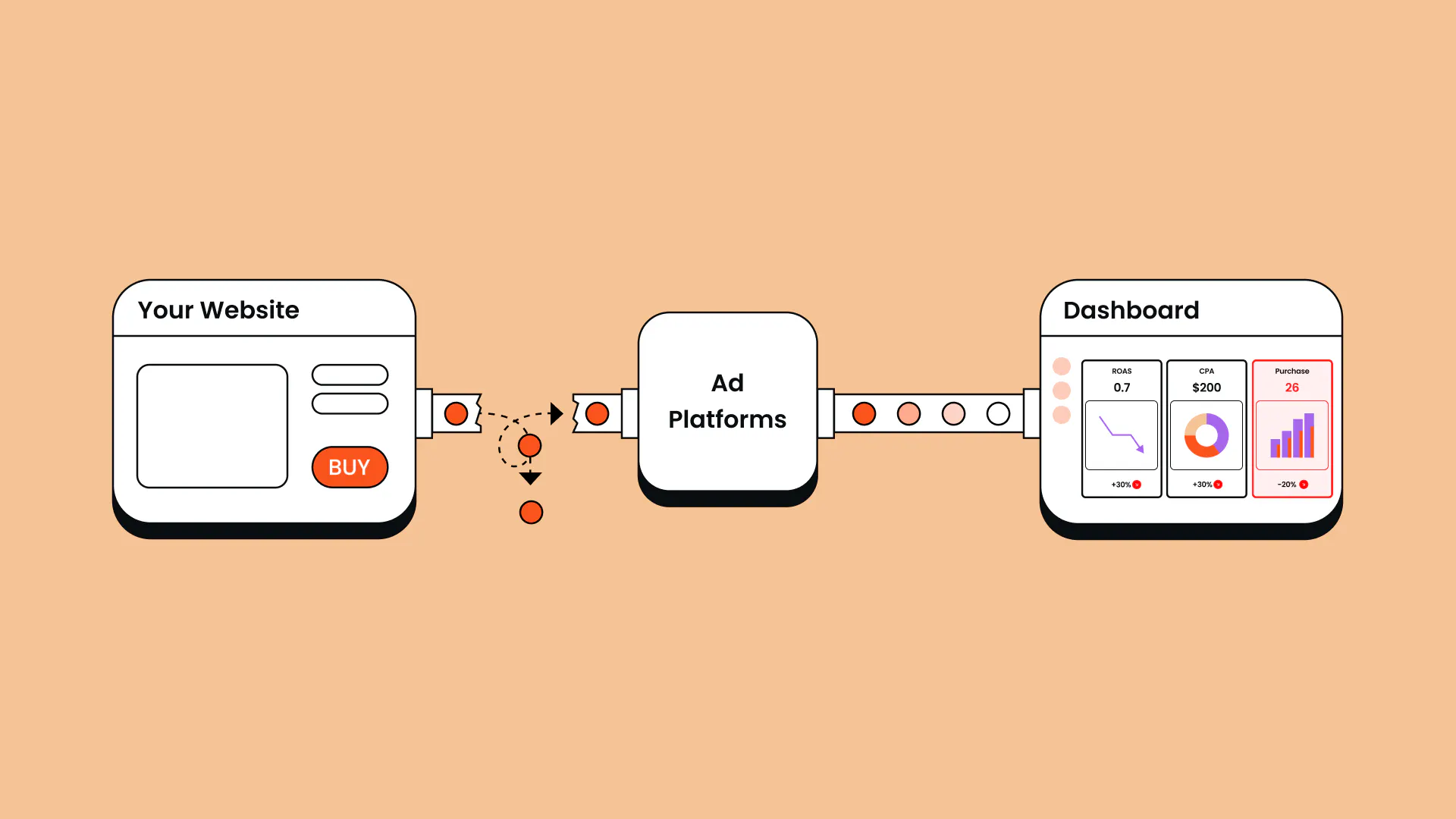
Browser-based pixels miss a growing share of conversions. Ad blockers affect roughly 1.77 billion users globally, iOS restrictions limit what third-party scripts can see, and GDPR and CCPA consent requirements mean many users opt out entirely.
When platforms train their algorithms on that incomplete data, they optimize toward the wrong things. But more on fixing this in Step 1 of the framework below.
A framework for optimizing your marketing spend
Next up is a practical and repeatable five-step framework to fix your marketing spending. Spoiler alert: Data quality comes first because everything else depends on it.
Step 1: Fix your data foundations
Your optimization tactics are only as good as your data foundation. Salo points out that most improvements don’t come from campaign tweaks or creative changes, but instead from the quality and consistency of the conversion data you feed into platforms.
"Small data issues can silently multiply into huge budget decisions. If the data is incomplete—like it always is in client-side setups—inconsistent, or simply faulty, the algorithm learns the wrong patterns."— Anni Salo, CEO at Tracklution
The solution is server-side tracking. By moving event collection off the browser and onto a server you control, you send that data directly to ad platforms via secure APIs. It bypasses ad blockers, browser restrictions, and cookie limitations, giving your PPC campaigns more complete conversion data to work with.
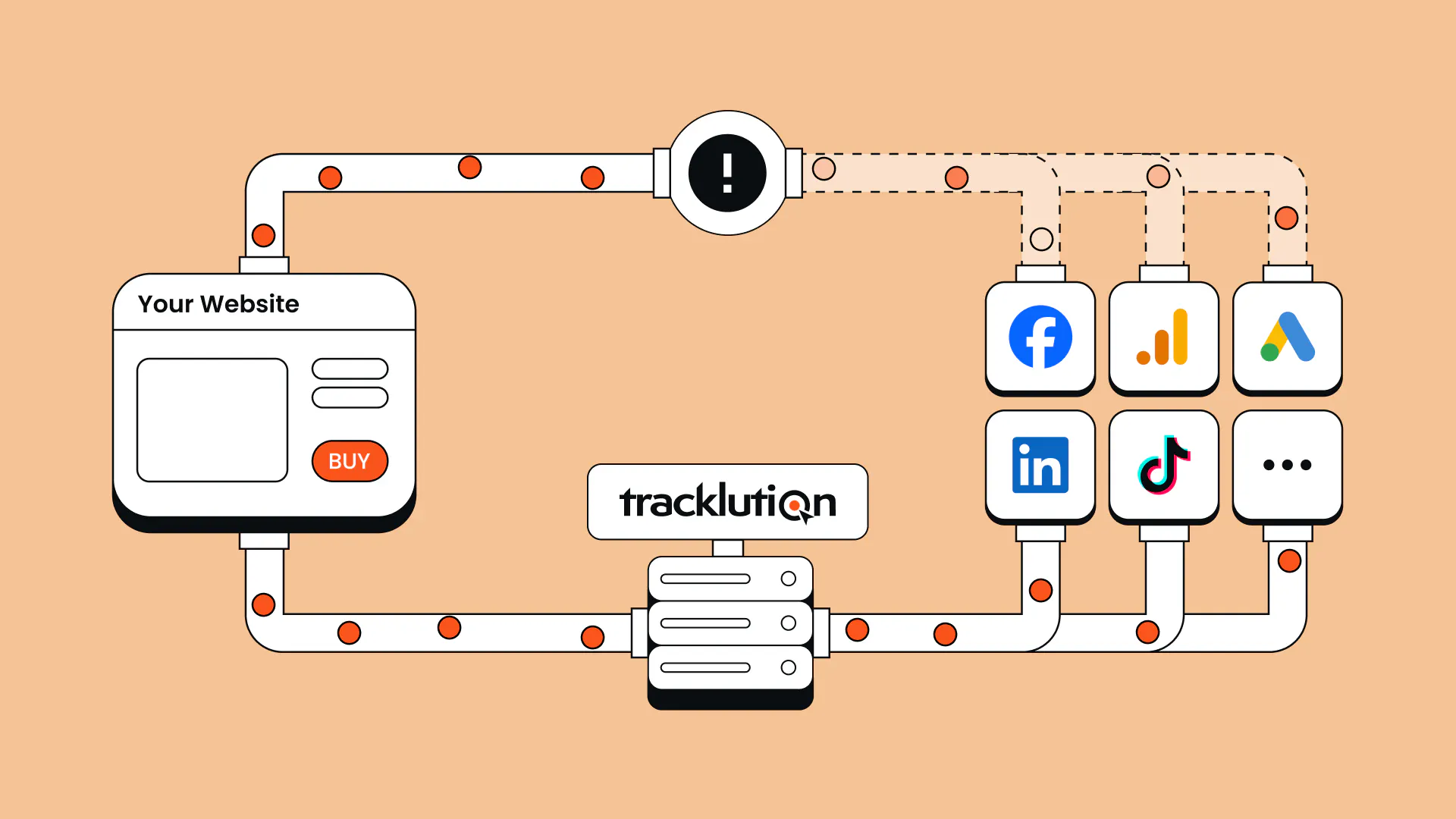
This is how Yummy, one of Northern Europe's leading meal kit companies, fixed their data foundation. With six-digit monthly ad budgets, their basic pixel tracking was missing conversions visible in their backend but not their ad platforms. “The less data you give the algorithms, the worse the campaigns perform,” says Heiman Safeen, Group Growth Officer at Yummy. “That's what triggered us to look deeper into this.”
After implementing server-side tracking with Tracklution, they tracked 30% more purchases, reached 42% year-over-year growth in new customers, and saw a 15% reduction in CAC.
Find out what's broken in your tracking setup
Tracklution's free tracking audit scans your current setup and shows you exactly where you're losing conversion data — and what to fix first.
Step 2: Set goals and define your metrics
With accurate data flowing, the next step is deciding what you’re optimizing toward. Start with your business goals around leads, sales, revenue growth, and market share. What does marketing need to deliver this quarter?
Then work backward to find the metrics and key performance indicators (KPIs) that map to those goals per channel:
- Cost per acquisition (CPA): What you pay to acquire a customer or lead.
- Return on ad spend (ROAS): Revenue generated per dollar of ad spend.
- Customer acquisition cost (CAC): Total cost to acquire a single new customer.
- Profit on ad spend (POAS): Gross profit your advertising generates per dollar spent (after subtracting COGS, fulfillment, transaction fees, and returns).
- Customer lifetime value (LTV): Total projected revenue you earn from a customer over the entire relationship. This one’s especially important for businesses where retention and repeat purchases matter.
Use the same metric definitions across channels so you can compare apples to apples. Which tools you use matters less than making sure everyone's measuring the same thing.
Step 3: Audit your current spend
It’s time to audit every budget line using zero-based budgeting principles, where every channel needs to justify its spend with data. Start by dividing spend into two buckets:
- Working spend: Budget that directly drives results, like ad spend.
- Non-working spend: Everything else, like agency fees, tools, and production costs.
Then dig into each channel. Look for:
- Overall marketing performance: Which channels, campaigns, SEO topics, and audiences are driving positive ROI? Which see higher conversion rates, and which see lower? For each, look at what you’re putting in versus what you’re getting out.
- Uncoordinated spend and cannibalization: Are your campaigns competing against each other? This can inflate your costs without adding reach. For example, you might bid on branded search terms where you already rank #1 organically. Or run two Meta ad sets with 80%+ audience overlap that end up competing against each other in the same auction.
- Black-box spend: How much is disappearing into categories with no transparency, like Google's “Other search terms”? Check your search term reports and identify what percentage of spend you can’t account for.
- Creative performance: Which ads, audiences, and formats are driving the highest conversion rates, and which are just running up costs? Compare against industry benchmarks to understand whether the issue is your campaign or the market.
- Frequency and creative fatigue: Are you overspending to reach the same people with the same creative? Pull up your top-spending ad sets and check frequency alongside cost per acquisition (CPA). If frequency is climbing while CPA worsens, that’s a likely sign of ad fatigue.
- Attribution windows and models: Are you comparing channels on equal terms, or letting platforms claim credit for the same conversion twice? By default, each platform uses its own attribution window, which means your audit can overstate performance across the board and leave you protecting spend on channels that aren't actually earning it. Cross-check platform numbers against your CRM for the same period—if they don't add up, you're looking at overlap, not incremental performance.
- Automation and data health: Are Smart Bidding and other automated rules getting clean performance data? Check whether your automated campaigns are hitting your target CPA or ROAS. If your Step 1 data foundation is weak, automation will optimize towards the wrong outcomes.
"Marketers need to know why each platform reports the numbers it does. Once you understand the differences in attribution logic, you can make informed decisions on attribution settings, as it also plays an essential role in what data the algorithm learns from, how much signal it gets, and how aggressively it can optimize toward your targets."— Anni Salo, CEO at Tracklution
Step 4: Reallocate using the 70/20/10 rule
With the audit done, it’s time to reallocate your budget. The 70/20/10 model protects you from two common traps: 1) staying too safe with what’s already working, and 2) shiny object syndrome, where you put most of your budget into new initiatives. This applies to all marketing campaigns, channels, audiences, topics, platforms, formats, and creative approaches.
Here’s how the model works:
- 70% to proven performers: What’s giving reliable returns above your target, based on reliable data.
- 20% to emerging opportunities: What’s showing early promise that need more data before you scale.
- 10% to experiments: New bets with a defined learning objective.
Let’s say you're running a €100k monthly budget. The 70/20/10 split might look like this: €70k goes to branded and high-intent search campaigns consistently hitting your ROAS targets, plus evergreen remarketing driving repeat purchases or qualified leads. €20k goes to a paid social media campaign targeting a promising new audience segment that's close to your CAC goal but not quite there yet. And the final €10k goes to testing a new channel like TikTok with a defined success metric, or a new landing page variant to see if it boosts conversion rate.
In practice, this also means cutting what isn't working. Campaigns below target with no signs of improvement get paused, budget moves to high-ROAS performers, and automation like Smart Bidding is only introduced once your data foundation from Step 1 is solid.
Step 5: Test, measure, and iterate
Optimization is a continuous cycle, not a one-time project. Reallocating your budget just once won’t capture the compounding returns that come from continuously refining your setup.
The loop looks like this:
Measure: Review campaign performance monthly for tactical decision making, and quarterly for strategic allocation.
Allocate: Set your budget based on what the (reliable) data shows, not what feels right.
Test: A/B test creatives, messaging, audiences, and landing pages one variable at a time. Run incrementality tests to verify channel value: would these conversions have happened without this spend?
Reallocate: Move budget toward what the tests confirmed works, cut what didn't, and hand off proven campaigns to Smart Bidding or Advantage+ once your data is solid. Then start the cycle all over again.
A monthly review doesn't need to be complicated. Pull together one view that combines all platform data with your CRM, and focus on the most important metrics like revenue, ROAS, CAC, and conversion volume by channel. Keep the group small, including your performance leads, marketing analytics owner, and whoever signs off on budget. That way you can make decisions on the spot about what to scale, what to cut, and what to test next.
Wrapping up
Better marketing spend optimization rarely starts with better campaigns. It starts with cleaner data, clearer goals, and an honest audit of what's earning its place in your budget.
The difference can be dramatic: One loan brokerage Tracklution worked with shifted their optimization target from submitted loan applications to actual paid-out loans (and the commission earned from them). Their paid-ad-attributable revenue scaled from €1.5 million to €8 million over a few years.
Once your data is solid and your goals are aligned to business outcomes, everything else gets easier to manage. Tracklution’s server-side tracking helps set that foundation so your platforms work with complete signals instead of guesswork.
Stop wasting budget on data you can't trust
Tracklution's server-side tracking gives your platforms the data they need to work smarter, leading to stronger ROAS.
FAQs
How much of the average marketing budget is wasted on ineffective spend?
More than most teams realize. Lunio’s 2026 Global Invalid Traffic Report estimates 8.5% of paid ad spend is lost to invalid traffic alone, equal to roughly $63 billion globally. Total waste is usually higher because it also includes the reasons listed in this article like optimizing for the wrong metrics, siloed data, and spending on channels that don’t convert.
What is the 70/20/10 rule in marketing budget allocation?
It’s a budget allocation model that splits spend across three buckets: 70% to proven channels delivering above your target return, 20% to emerging opportunities that need more data, and 10% to experiments with a defined learning objective. It’s not a hard and fast rule, but a handy framework to build from.
How does server-side tracking improve marketing spend optimization?
Browser-based tracking misses a growing share of conversions due to ad blockers, iOS restrictions, and cookie consent. Server-side tracking captures conversion events at the server level and sends them directly to ad platforms via secure APIs, bypassing browser limitations. As a result, platforms get more complete data, targeting gets sharper, and wasted spend shrinks.
How often should you review and reallocate your marketing spend?
Monthly for tactical stuff (which campaigns are working, which aren’t), and quarterly for the bigger picture (which channels should get any budget). Avoid making major changes more often than that, especially while automated bid strategies are running. Intervening too often disrupts the learning phase and the machine learning algorithm has to start over.
What’s the difference between working and non-working marketing spend?
Working spend is directly tied to results, like ad spend optimization. Non-working spend covers everything else—like agency fees, production costs, creative, tools, and admin—but doesn’t move the needle directly. Understanding the ratio tells you whether there’s money tied up in fees, production, or tools that could be doing more as media spend.
What's the biggest mistake marketers make when it comes to spend optimization?
Assuming the problem is in the campaigns, when it’s usually in the marketing data feeding them. Client-side setups are often missing conversions, and optimizing campaigns based on incomplete data means training algorithms on a version of reality that doesn’t exist. Before tinkering with campaign settings, fix your data foundation.
Related posts
Performance Marketing
Digital marketing analytics: What it is, what to track, and how to make it reliable
Digital marketing analytics tells you what's working—but only if the data feeding it is accurate. Here’s how to build an analytics setup you can trust.
Performance Marketing
Digital marketing analytics: What it is, what to track, and how to make it reliable
Digital marketing analytics tells you what's working—but only if the data feeding it is accurate. Here’s how to build an analytics setup you can trust.
Performance Marketing
Profit on Ad Spend Explained: Meaning, Formula, and How to Improve It
Are your ads actually profitable? Learn what Profit on Ad Spend is, how you calculate it, and the strategies to improve your margins, ad efficiency, and the data behind it all.
Performance Marketing
Profit on Ad Spend Explained: Meaning, Formula, and How to Improve It
Are your ads actually profitable? Learn what Profit on Ad Spend is, how you calculate it, and the strategies to improve your margins, ad efficiency, and the data behind it all.
Performance Marketing
PPC Optimization: How to Improve PPC Performance in 2026
Stop wasting ad spend. Discover the core PPC optimization levers and why better conversion data is the foundation of high-performing, scalable campaigns.
Performance Marketing
PPC Optimization: How to Improve PPC Performance in 2026
Stop wasting ad spend. Discover the core PPC optimization levers and why better conversion data is the foundation of high-performing, scalable campaigns.
Questions and answers
What does Tracklution actually do?
Tracklution sends conversion data directly to ad platforms (Meta, Google Ads, TikTok, etc.) through server-side APIs. Instead of relying on browser pixels that get blocked by ad blockers, iOS privacy changes, and cookie restrictions, your data goes server-to-server. The result: ad platforms see more of your real conversions, their algorithms optimize better, and you get better ROAS.
What is server-side tracking?
Server-side tracking gathers first-party data directly on your website and sends tracking events to ad platforms via Conversion APIs. This approach bypasses restrictions from iOS devices, ad blockers, and privacy-focused browsers, providing more accurate data and making your paid advertising more efficient.
Is it just one setup that feeds data into all my ad platforms?
Yes. You install Tracklution once, connect your ad accounts, and it sends conversion data to all platforms simultaneously through their respective APIs (Meta CAPI, Google Ads API, TikTok Events API, etc.). No need to manage separate server-side setups for each platform.
How much more conversion data will my ad platforms actually see?
On average, clients report 34.2% more conversions compared to traditional browser-based pixels. This means the ad algorithms have significantly more signal to work with, which translates to 15-35% lower customer acquisition costs for most clients.
Do I need developers to set this up?
No. Setup takes 5-15 minutes depending on your platform. For Shopify, WooCommerce, and other supported platforms, it is plug-and-play. You do not need custom coding or engineering resources. For GTM users, you can keep your existing setup and add Tracklution alongside it.
Do I need to remove my existing tracking tags?
Not necessarily. Tracklution works alongside your current setup. You can run both in parallel initially to compare data, then decide whether to simplify.
What about the DNS / CNAME setup?
Tracklution uses a first-party CNAME record on your domain for data collection. This takes a couple of minutes to configure and up to 48 hours to propagate. It is what makes the tracking resistant to ad blockers and browser restrictions.
Can I verify that the data is actually more accurate?
Yes. Run Tracklution alongside your existing tracking and compare. The dashboard also shows "recovered events" so you can see exactly how many conversions would have been missed without server-side tracking.
Can I distinguish between organic and paid traffic?
Yes. Tracklution preserves traffic source attribution. The conversion data sent to each ad platform includes the proper attribution parameters.
What about offline conversions (phone calls, in-store, CRM events)?
Tracklution supports offline conversion tracking through webhooks and CRM integrations. If someone clicks an ad, then converts offline, you can feed that back to the ad platforms. Clients using this see up to 35% reduction in acquisition costs because the algorithms learn from the full conversion picture.
How does this work with cookie consent and CMP tools?
Tracklution supports both Basic and Advanced Consent Mode. It reads your CMP data layer automatically and respects user consent choices. In Advanced Consent Mode, it can still collect anonymized, cookieless data when users decline cookies, which helps ad platform modeling without violating privacy rules. Fully GDPR-compliant.
How is this different from Stape or building your own sGTM setup?
Stape provides server-side GTM hosting, which means you still need to build and maintain the tags, triggers, and configuration yourself. Tracklution is a complete solution: plug-and-play setup, automatic event detection, built-in consent management, a real-time analytics dashboard, and ongoing maintenance of all API connections. When ad platforms change their APIs (which happens often), we handle the updates.
How does the agency partner model work?
Single dashboard to manage all client accounts. Each client has their own tracking container. The platform handles all technical maintenance, so you are not stuck troubleshooting API changes or broken tracking.

Have further questions?